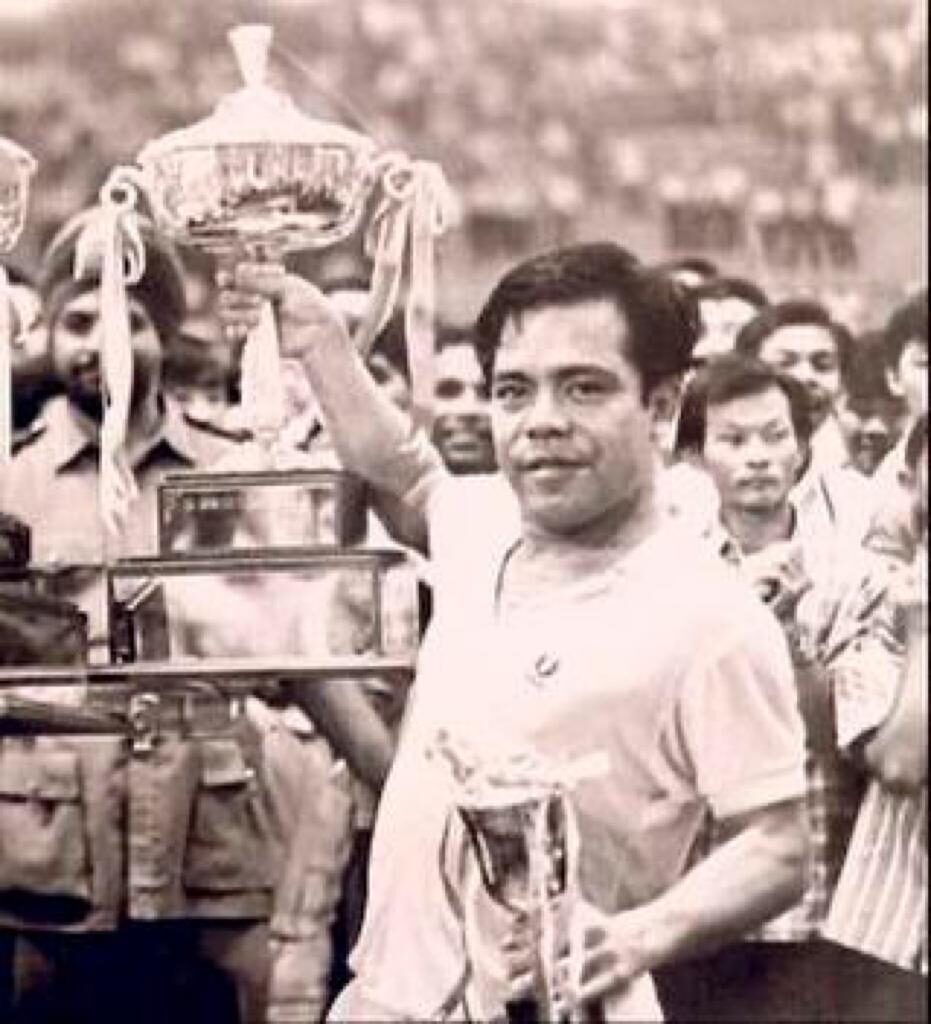
In late November 2022 Ramayah contacted me and asked if I could write his story.
I told him I would be honoured to do so and asked him to send me his CV, photos and all the news clippings, including the articles I wrote on him.
To proceed, I contacted the golfing fraternity including former PGA President Datuk Ramlan Harun and pro Barie Bluah I was told Ramayah was down with cancer and warded in the hospital,
When he called, it did not occur to me that Ramayah was ill! Or did he have a premonition of another obstacle in his illustrious journey as a professional golfer?
After all he had three close calls during his lifetime-an accidental shooting, a car accident and a plane crash!
I first met Ramayah when he as a 16 year old caddy with RSGC in 1973 when I was a reporter with NST.
His is the story of poor Indian parents who were employed as workers at one of Malaysian’s oldest golf courses.
I was 23 and an 11-handicapper but when I met Ramayah he was about to turn pro the following year in 1974.
At RSGC Ramayah introduced me to the Yusof brothers Zainal Abidin, Sahabudin and Nazamudin and the elite golfing circle including the late V. Nellan.
As sportswriter, the Malay Mail sports editor Maurice Khoo, a single handicapper, allowed me to play in corporate pro-am events while keeping in touch with the golfing fraternity.
Through Ramayah’s influence and tips, my game improved by leaps and bounds and Champion of the three-day Malaysian intermediate Championship in Seremban in 1978, Malaysian Mass Media in Subang in 1980 and inaugural two-day Sarawak Tun Rahman Cup in Kuching in 1982.
After leaving for Kuching in 1981 we lost touch until I read that Ramayah was featured in an air crash in Subang airport in 1983.
At the last “Sports Flame” gathering at Concorde Hotel a few years ago, I met Ramayah and the local golf fraternity and he confirmed the golfer’s unique story.
While most of the passenger made a quick departure from the downed aircraft, Ramayah was more concerned with his prized golf set.
Ramayah said: “Yes, I carried my golf bag slogging through the mud. Golf is my bread and butter.”
Yes, we need to pray for Ramayah in this time of spiritual need!
Ramayah—stay the course as there are only two more holes to go.
At the height of his career he crossed swords with some of the world’s best players, including Fred Couples, Davis Love III, Bernhard Langer, Retief Goosen, to name a few. Indeed Marimuthu Ramayah remains entrenched in our record books as Malaysia’s first globe-trotting golf professional.
Yet, despite all the golden trophy moments there were many hard knocks. Countless forays into the gruelling rounds of qualifying for the British Open, many futile attempts at getting a card on the Japan Golf Tour. Most would have thrown in the towel. Not Ramayah, stubborn as a mule he went back time and again. He stopped only when he realised it was time to move on.
Undoubtedly, he was Malaysia’s golfing trailblazer, cutting the path for our next gen pros. Dare we say that he was the epitome of the phrase – “no venture, no gain?” Ramayah showed it was possible for Malaysian pros to win titles outside the country. He has won countless regional titles.
In his later years he settled into the teaching side and I recalled his quote – “I use my eyes. Believe me I can tell what’s going on with your swing by just looking at your swing just once,”
Ramayah was Malaysia’s No.1 golfer for 21 years, from 1976-97. He played in 13 World Cups, a record still unbeaten. Hail the Old Master!
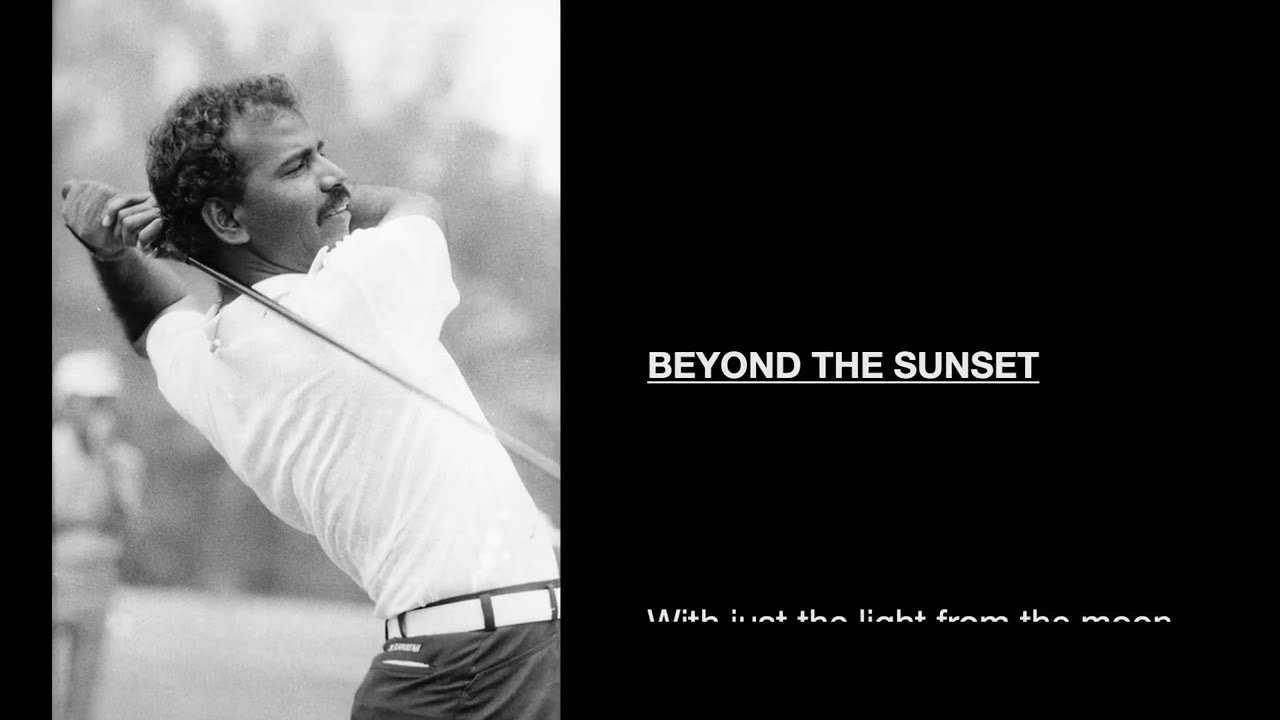
With just the light from the moon.
They cast a shadowy figure on the 17th Hole of RSGC’s Old Course.
The trio –V. Nellan, K. Selaruas and M. Ramayah were just children.
They were hunkered over their makeshift “guava clubs.”
However their childhood dream was beyond the 17th green.
But here is where their golf train journey began.
From picking golf balls, caddying to the professional tour.
The “golf spell” took them far and wide.
But it was Ramayah who blazed into the golf limelight.
Everytime he clutched a club, he came alive.
With a gentle grip, a smooth, sweet swing and a waggle.
His 7-iron always found a spot to land.
A chip, wedge shot and a putt found the hole.
He acknowledges the applause
Holds his hand in the air
And tips his golf cap
As Ramayah strides off to join his childhood friends
Beyond the sunset.
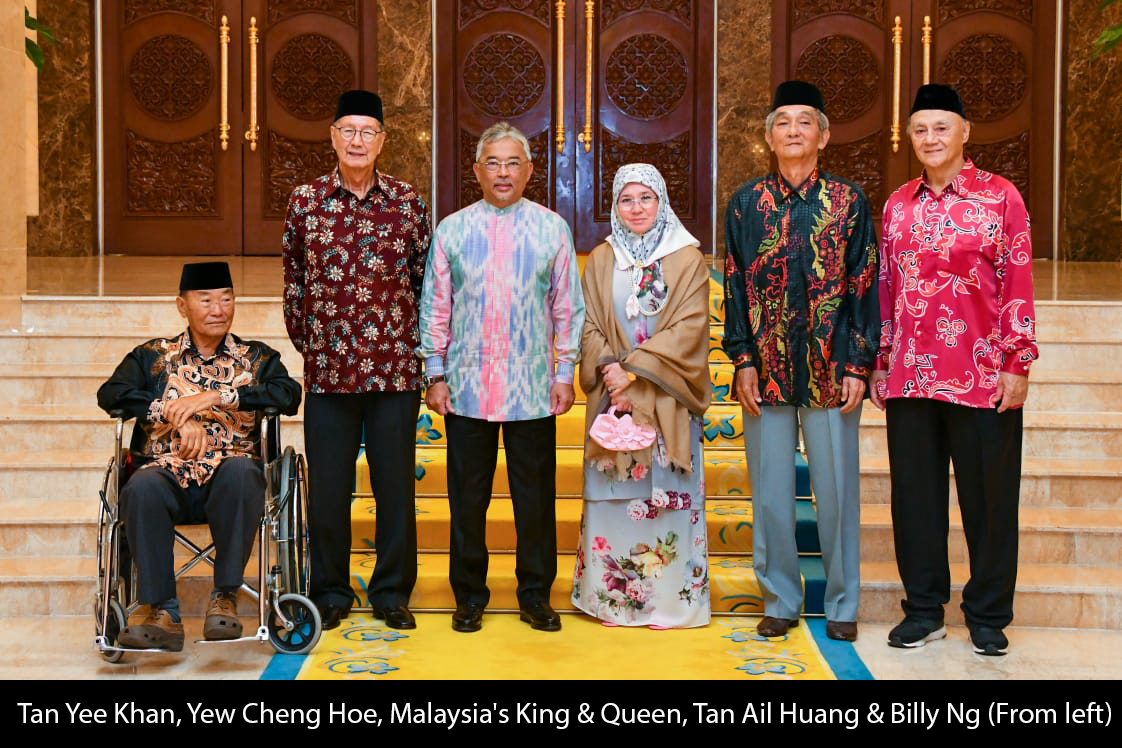
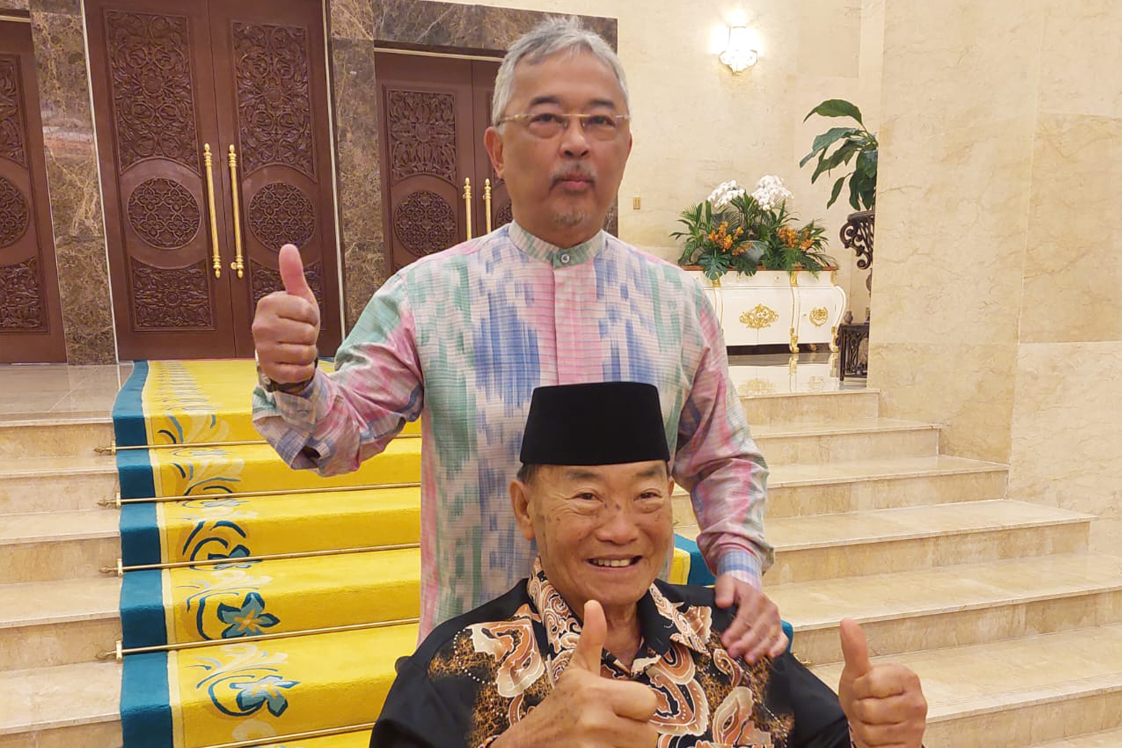
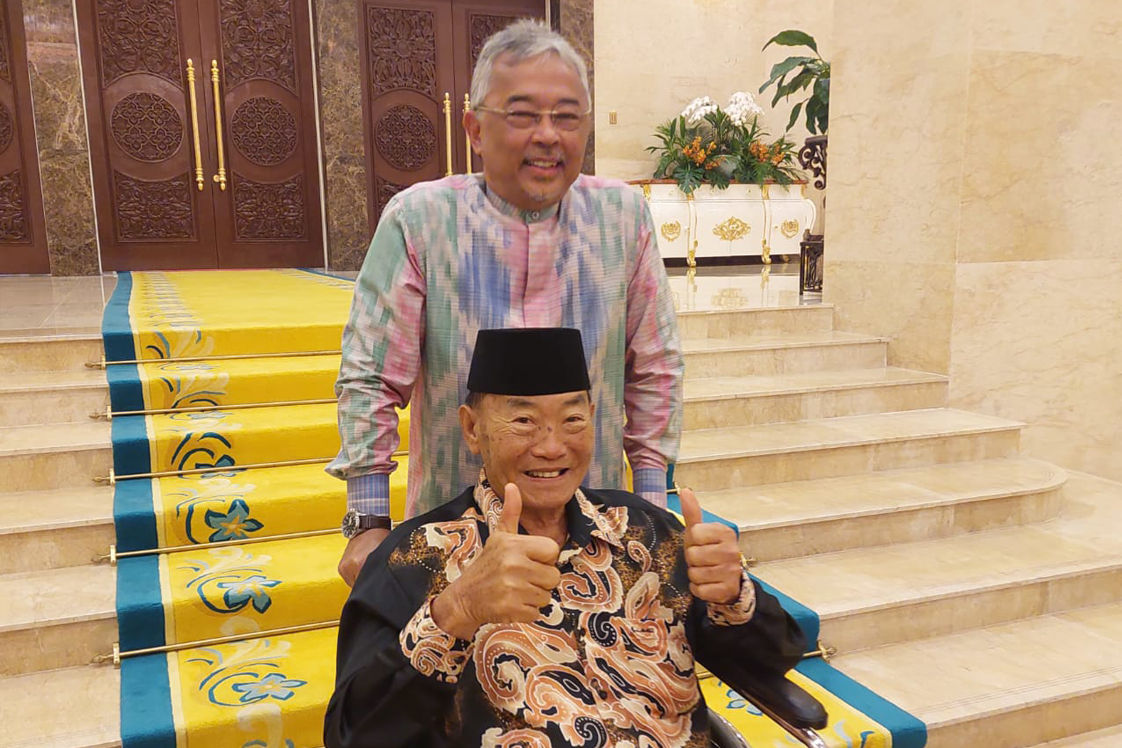
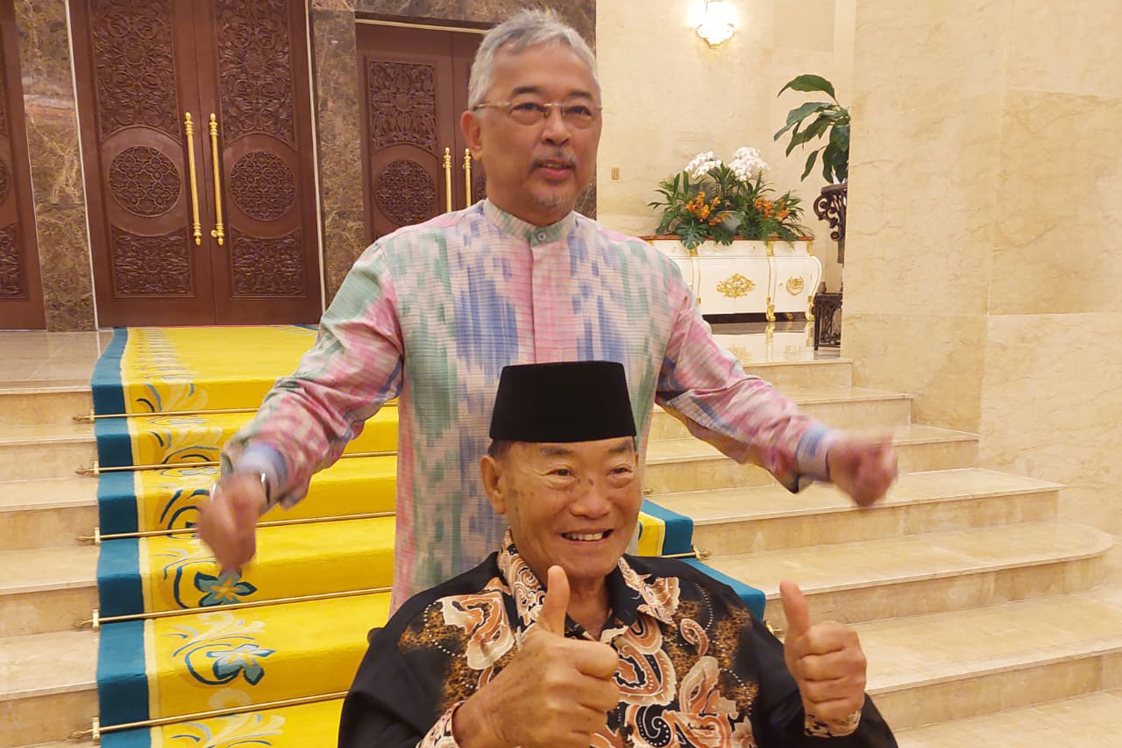
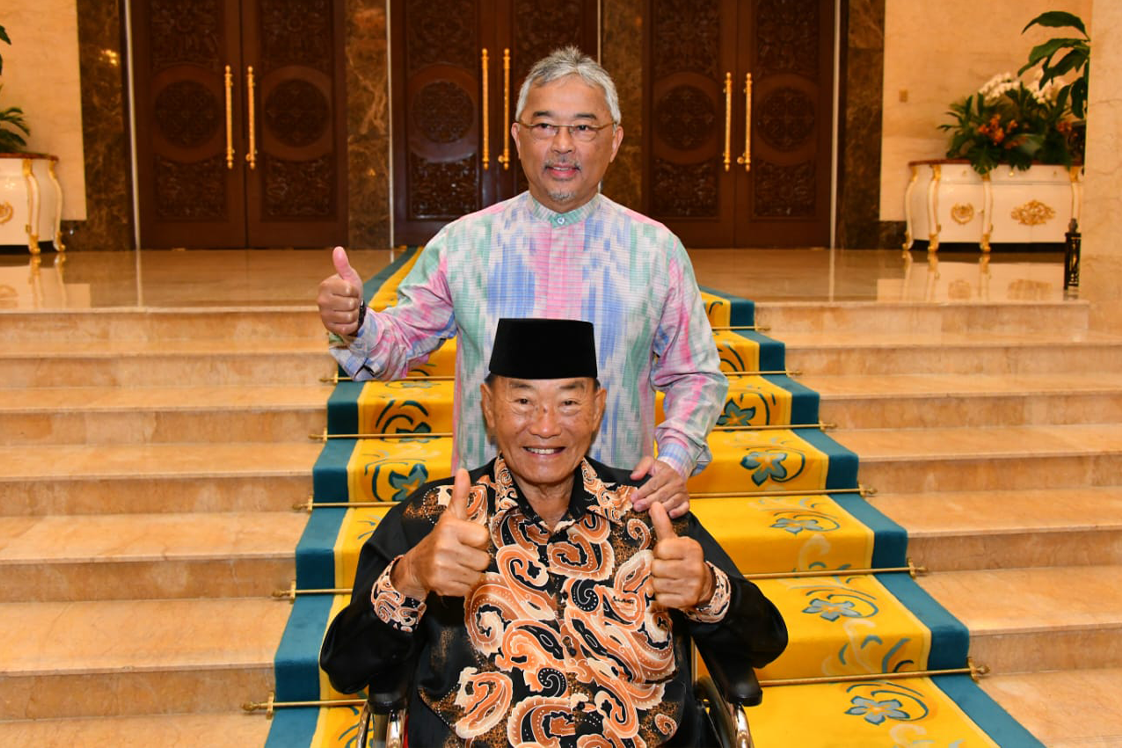
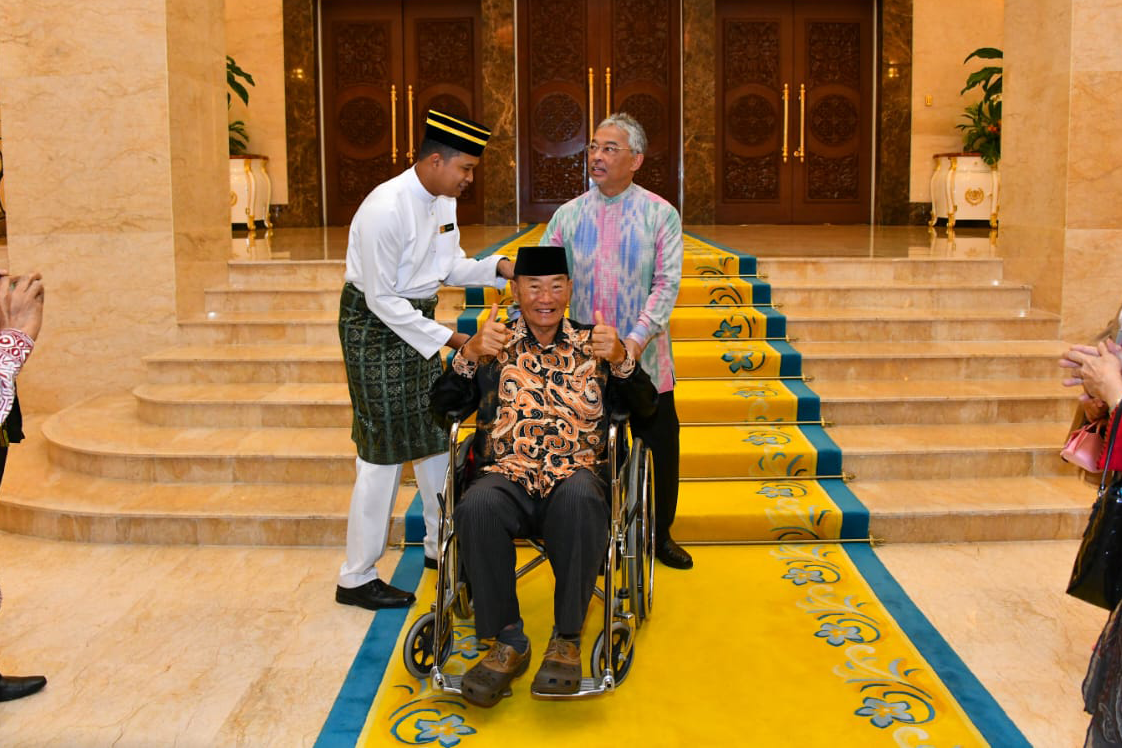
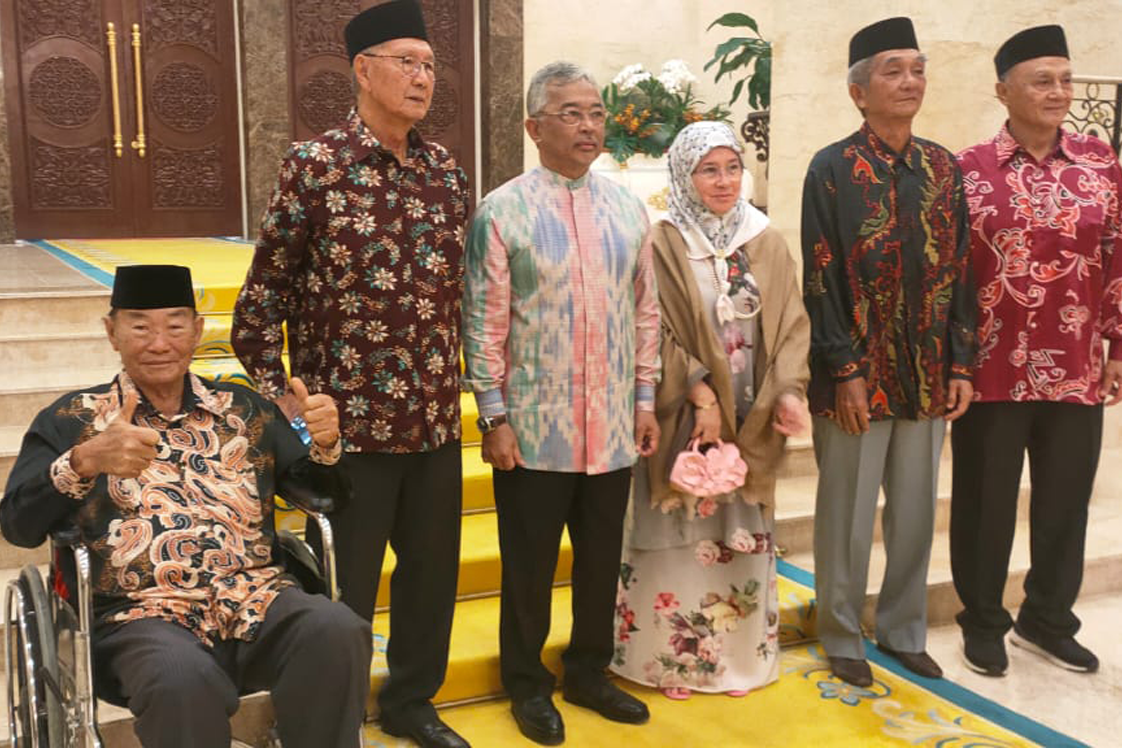
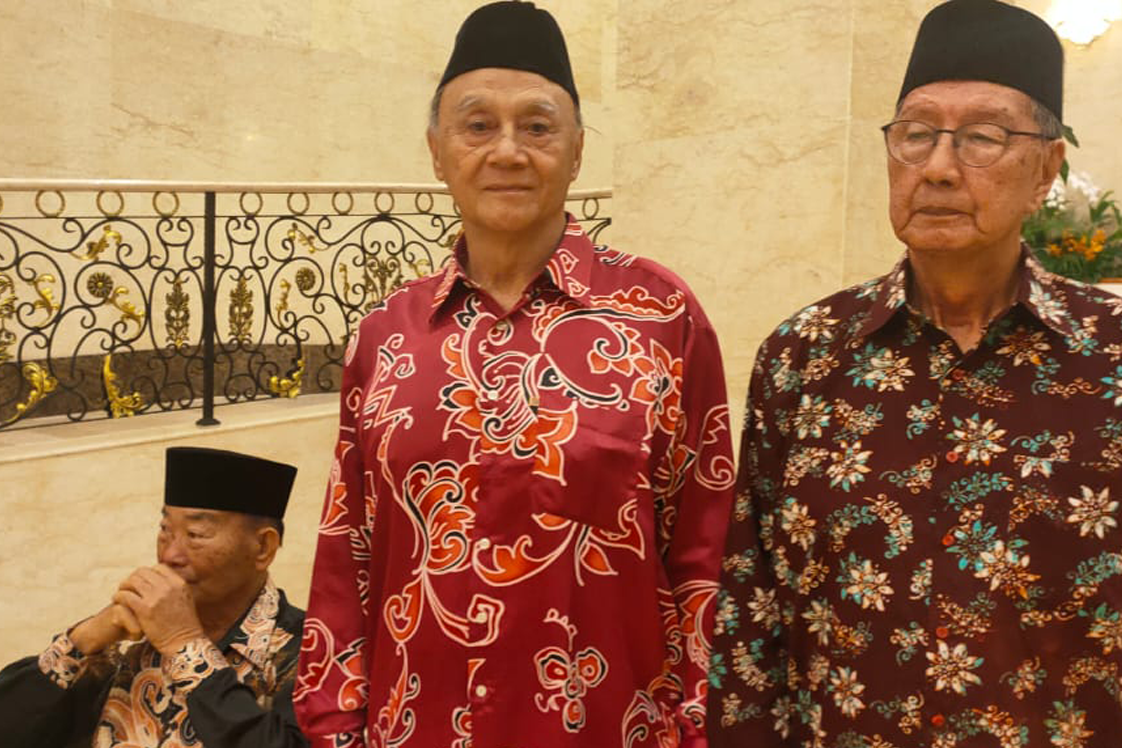
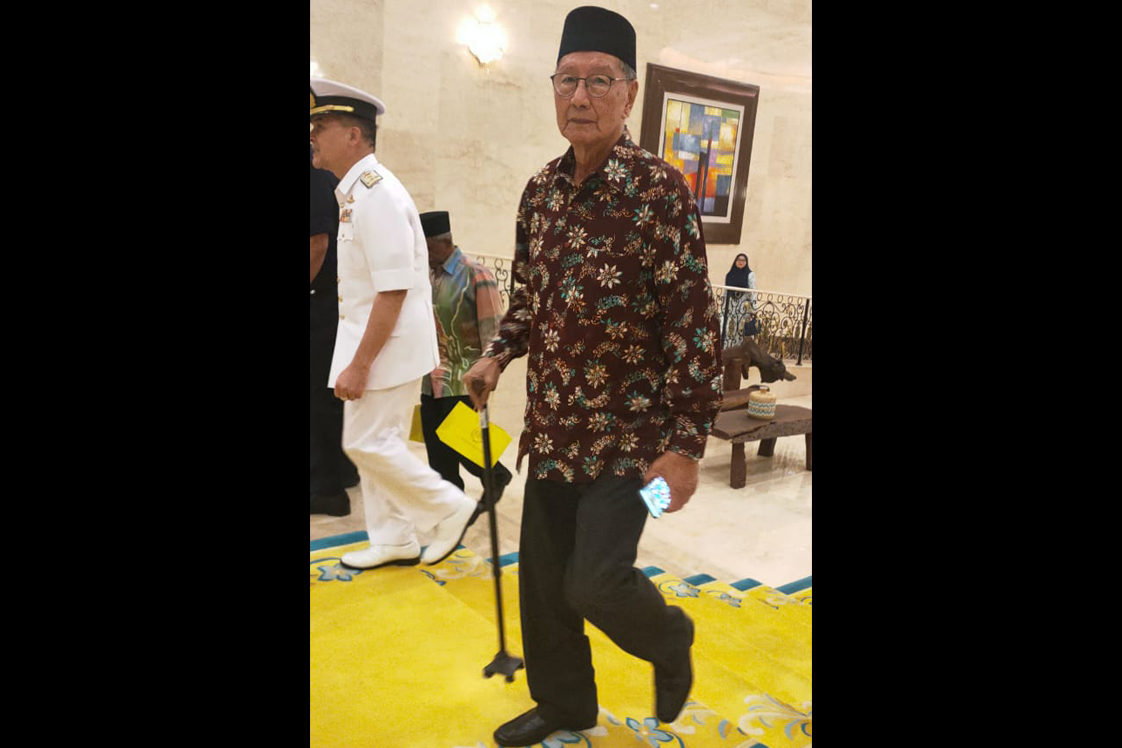
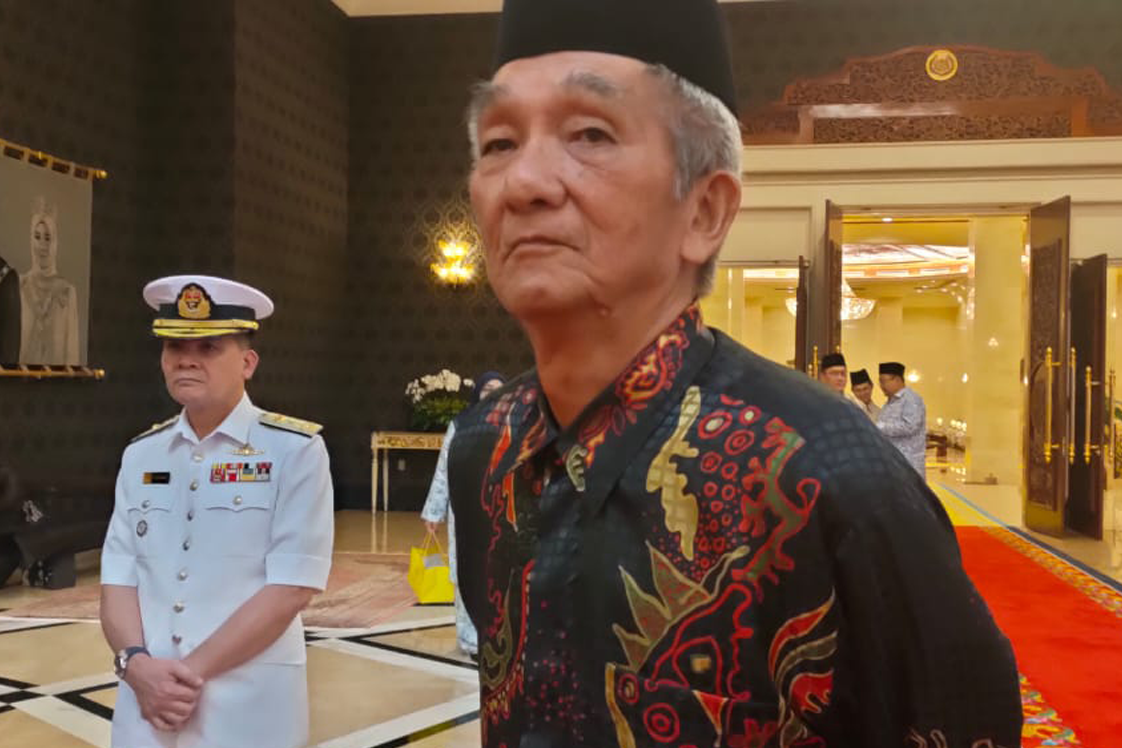
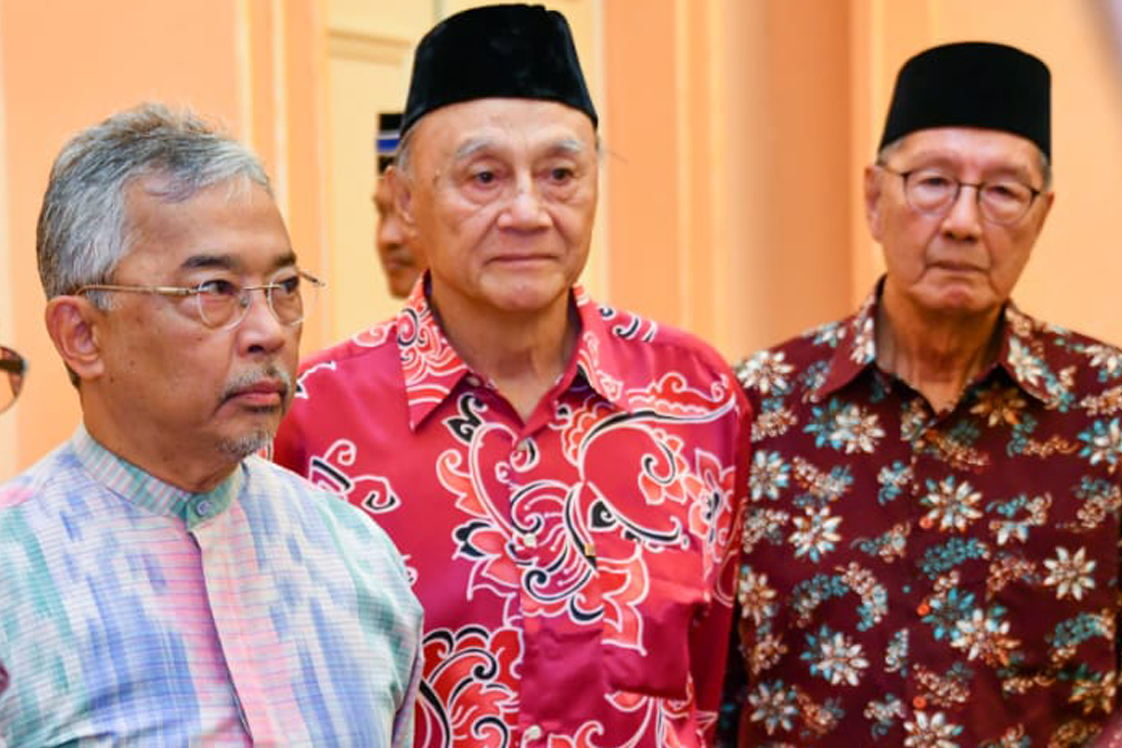
The celebration of hosting the legendary 1967 Thomas Cup badminton team by Malaysia’s King and Queen is a celebration that is very much appreciated .
The reception at the Palace on January 13, 2023 in Kuala Lumpur was to honour their enormous services and contribution to the country. It is a landmark occasion long overdue to these players.
Those of us who were fortunate to have witnessed their historic sporting victory 56 years ago in Jakarta, will continue to have memories embedded in their minds and hearts.
It was a tremendous achievement. Only those who grew up in that era, will recall what these great guys had to endure at the Istora Stadium.
It was just not having to focus on playing the game. They also had to contend with the hostile home fans, who used every “off court” tactic especially cameras flashing when Yee Khan & Ng Boon Bee were about to serve.
As a sportsman myself, I know it must have been extremely difficult not to be rattled.
I’m so very pleased that this remarkable team of heroes ,were finally recognized for their sporting services to the nation.
Tan Yee Khan, Teh Kew San, Yew Cheng Hoe, Tan Aik Huang, Billy Ng, fully deserve this as they brought so much pride to the new nation of Malaysia.
Although the reception did not have much glitter, without a doubt , It was a great Royal gesture by Malaysia’s King and Queen to bring these forgotten heroes together and to say “thank you” to them.
Forgotten Heroes
Forgotten Heroes
Forgotten Heroes
Forgotten Heroes
It’s sad that Ng Boon Bee is longer with us.
And it’s even more sad that the present generation may not truly understand, and appreciate the exploits, hardship and the sacrifices made, by not only this band of badminton players, but all of the other Sporting Personalities.
They had to endure the very same hurdles, to achieve their goals of wearing the National Colours. This they all did with utmost pride.
May this landmark occasion of recognition for the efforts, services and contribution of the ’67 badminton team by the King and Queen, be an event that continues in the future.
To this effect, I believe that the nation does owe a debt of gratitude, not only to the great sporting personalities, the officials, but also to the Sports Journalists, who contributed so much to the nation too.
Franco D’Cruz appeared for Malaysia in hockey at the 1972 Munich Olympics, and the World Cup in 1973 (Amsterdam) & 1975 Kuala Lumpur).
Pele, football’s icon on his farewell tour of Asia in 1974.
Here he’s up against Hong Kong Selection’s keeper Chow Chee Keong of Malaysia
The world’s greatest footballer was troubled by the goalkeeping of Chow, Asia’s finest who was called the “Asian Steel Gate.”
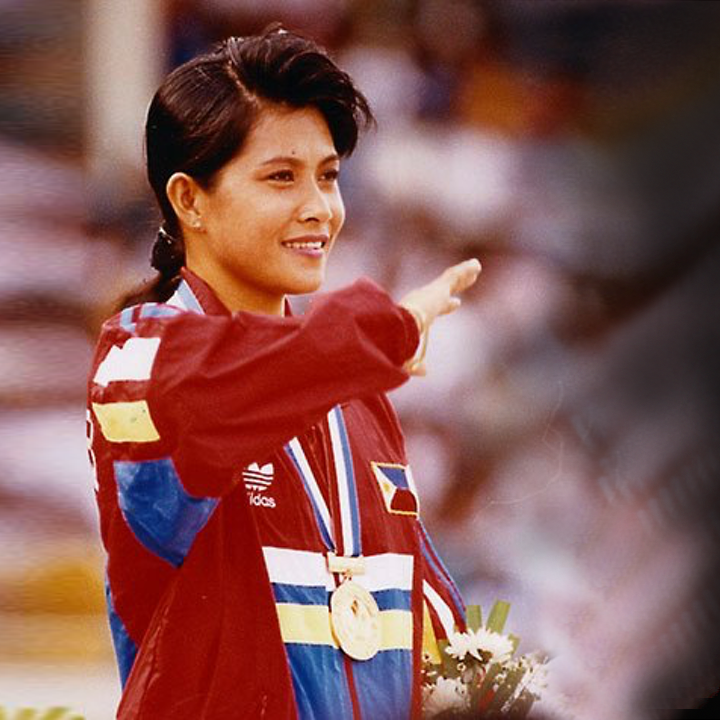
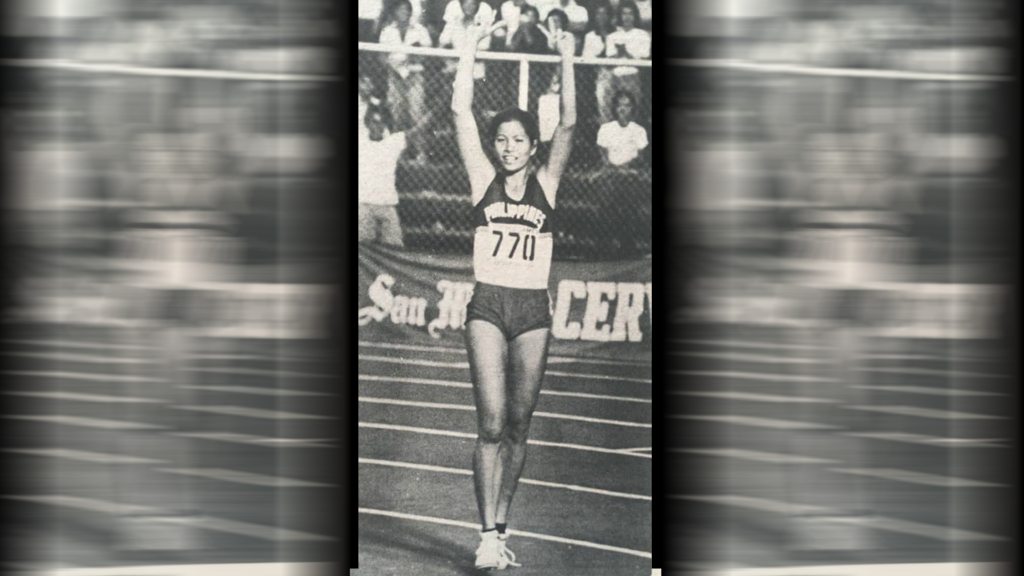
The Marina-mania that gripped the athletics scene in the 1977 SEA Games is a thing of the past. It’s now the Lydia craze. Everywhere you go in Manila, people will go into rhapsodies over this long-legged darling of the track.
Lydia De Vega has been described as having world class promise. And she is set to take over as the new SEA Games queen of the track from Burmese star Than Than. What’s her background? How did she develop her athletic ability? And what does she think of her future? Sports Mirror finds out.
“I want to be world champion,’ said Lydia, standing tiptoe and raising her right hand…. reaching for the sky. “And I want to be an Olympic champion,” she added opening her eyes wide.
“Well” I said, “If you are going to be a world champion, you’ll definitely be an Olympic champion.”
“Not necessarily,” she quickly countered, breaking into a wide grin.
“There have been world champions before who didn’t win any Olympic gold,” she had me there. How many Ron Clarkes, Jim Ryuns…. world record holders had retired without an Olympic gold to their name.
This observation comes from a 17-year-old college student who bursts into girlish giggles at the slightest joke, who’s all arms and movement when trying to describe something vividly, has a simplicity that’s disarming and a charm that’s appealing, rolls her R’s and ‘aahhs’ her A’s with the usual Filipina accent.
Fame hasn’t changed her, say many Filipinos. She is still the simple bright-eyed girl from Barrio Kalbaryo, a thickly populated and poor suburb of metro-Manila, a suburb of closely connected houses muddy pathways where costume jewellery is made and sold.
She’s the girl who developed her running ability by sprinting more than 500 metres to buy cigarettes for her father when she was very young. A girl who used to play ‘Chinese Garter” – a popular street game where a tape or string of rubber band is held up high by two kids and the third takes a flying kick hooks the string down with the right and whips over without the leg touching the string – with such grace and balance that those who saw her said she was a natural.
TEMPTATION
It was the game she was playing when we met the other day at the 5,000ft high Gintong Alay athletics training camp in Baguio City. She had finished training in the morning and was dressed casually – light-brown slacks and a yellow T-shirt that had ‘Halloween’ printed boldly in front.
The heptathlon trails were going on and for Lydia, the finishing tape strung between the posts presented a temptation she couldn’t resist. ‘Chinese Garter’. This time she sailed over it straddle style without touching the tape.
Screams of delight and laughter greeted her each time she attempted the jump. And Lydia would respond by pulling funny faces. Watching her, you would hardly guess that this is the girl who is being described as future world class material. She is the uncut diamond in a glittering pile of talented athletes that the Filipinos have brought together.
“Do you know I would play the game to this height even when I was very young,” she said stretching her right hand well above her head and laughed.
What was that? A glitter of silver? A wire hooked to one tooth? False teeth, I reasoned.
“You have false teeth,” I asked, surprised because she seemed to have such a beautiful set. Surprised because she was young and healthy.
“Yes” she cried delightedly with impish humour at my surprise. She lost her front four upper teeth when very young. “Too many sweets and candies. I still like them. I like eating very much, that’s why I’m so fat,” she spread her arms sideways descriptively and wiggled her hips.
Lydia was still running gap-toothed in last year’s national championship. It was only late last year that she received her dentures from her father Francisco, her one-time coach who is now her confidante and masseur.
Just then he came up, right hand in a bandage, and smiled widely. His front four teeth were also missing. “I lost them in a fight,” he explained. He was a boxer in his younger days.
It was in the streets and alleys of Kalbaryo that Lydia developed her talents. When she was just nine, she would run like a hare to buy cigarettes for her father.
It was while playing ‘Chinese Garter’ that Lydia was spotted. When school was over it was the streets and ‘Chinese Garter’ for most of the girls. One school teacher noticed the facile grace and perfect balance with which she executed her jumps.
He asked Lydia to compete in the school sports the following day. She was then just a frail, waif-like 12-year-old. Lydia agreed. But she had to win over her skeptical parents first and that was left to a neighbour who persuaded her parents to let her compete.
Grudgingly, Francisco forked the pesos necessary to buy a new pair of shorts for Lydia. But unconvinced, Francisco did not attend the meet. The only fan Lydia had then was her neighbour who was cheering wildly as Lydia stormed to first place in five events.
Some dust was stirred as an athlete couldn’t compete in more than four events. But Lydia was given her prizes all the same. That finally convinced Francisco that his daughter had some talent after all. He began attending her sports meets and became her first coach and trainer.
Simple, soft-spoken, chain-smoking Francisco has been a controversial figure in Lydia’s athletics career. There is this story of how he slapped Lydia in public when she was training at the Marikina Stadium where she set the national 400 record of 54.6 last year.
Lydia made several foul jumps in the long jump. Francisco, convinced that she was fooling around, gave his daughter two tight slaps in front of the other athletes.
Lydia cried softly …. “It hurt,” she said the other day, rubbing her cheeks. But it worked, and Lydia was more serious and went 5.5-plus metres in her subsequent attempts.
“I have these two hands,” said Francisco, the boxer in him surfacing. “If the right is not enough, then I give the left. But I don’t ill-treat my children. I give them what they want. When Lydia had washed up and was ready to go back that day when I slapped her, she came up to me smiling and asked, ‘Papa. Give me some money.’ I gave her the money. I only discipline my children. Francisco has six children, three boys and three girls. Lydia is the fourth.
There was another incident when an angry Francisco pulled his daughter out from training camp in Baguio because she was being put into the 800 metres. Many coaches, including Asia’s legendary Chi Cheng, believe that it is over the 800 metres that Lydia will make her mark.
Those long legs were meant for the 800 metres, they said. But Francisco would have none of it. She is too young for it now. Maybe when she is older, he said. Attempts to get Lydia back into camp failed and she was suspended for some time last year before the warring parties were reconciled.
Father and daughter enjoy a very close relationship. “He has every right to spank me and decide what’s good for me,” said Lydia. Then a ring on her engagement finger caught my eye.
Is she engaged? “Yes to my father,” she joked. “He made it himself and gave it to me. I wear it always.” Francisco is also an artisan who makes the costume jewellery that one finds in tourist centres in Manila.
PROMINENCE
It was as a spindly-legged schoolgirl that Lydia swept into prominence by bagging three individual golds and two relay golds at the 1979 Singapore Asean Schools athletics championship. Now Lydia, who turns 16 on December 26th – Boxing Day – has grown in stature and physique.
“I am 5ft 6ins now,” she proclaims proudly, “and weigh 120lbs.” Again, that hip wiggle. “I am a first-year student in college and hope to pass out with a degree in physical education.”
Lydia renews her rivalry with Malaysia’s Mumtaz Jaafar – a rivalry which dates backs to the Singapore Asean Schools meet – in this Manila Sea Games and will attempt to crack the myth of invincibility surrounding Burma’s Than Than who holds the Sea Games 200m, 400m, 800m and 400m hurdles records.
The brown-skinned, dark-eyed Filipina is down for the 200m and 400m where she has a season’s best of 24.0 and 55.2 …. Which make her the brightest gold medal prospect in both events.
Can she win the events? The playful child in Lydia took a backseat. She looked mournfully at her left instep. Her left foot was bandaged. “I really don’t know,” she shook her head. “I injured my foot, you know when I was climbing the stairs back to camp after training in Baguio.
“It’s a bit better now. But I can only hope to do my best. I hear that Mumtaz has done some good times. And Than Than is a very powerful and experienced runner. I can try my best.”
Lydia has been taking it easy during training feeling secure that the two golds are hers, says Gintong Alay head coach Tony Benson. But when she heard that Mumtaz had gone under 12 for the 100m and clocked 24.4 for the 200m, she saw the threat and put in more effort.
Benson agrees that Lydia has world class potential. “She will make a very good 800m runner. She has the speed but will have to build up stamina and endurance and put in more effort,” he says.
Lydia could make an impact in next year’s New Delhi Asian Games. But it is the 1988 Olympics that every athletics follower in The Philippines is waiting for. This is where she is going to make her name known worldwide, they say.
“That’s if some boy doesn’t come along by then and asks her to decide between him and track and field,” quips Nars Padilla, camp commandant at Baguio City, who says that Lydia is a very exemplary athlete.
NOTE: This story appeared in the weekly Sports Mirror (Malaysia) in December 1981 before Lydia de Vega became a “star”.
Ng Boon Bee was already a big name in the badminton world and synonymous with Tan Yee Khan when I was trying to make a mark in the sport in the late 1960s. Their successful partnership with relentless and powerful smashes was always imprinted in my mind.
Somehow, I didn’t make it into ‘Big Time’ because of two primary reasons: my journalism career got in my way (which is a good thing as I look back to those years) and my belief that I could be a good player if I had perfected my strokes well enough.
On this second point, how silly and mistaken I was. The game of badminton necessitates one to have match experience in order to excel as no one player is the same. I fault myself for not listening to my dad in this department. No point crying over spilt milk now, as they say.
Back to Boon Bee. One day at the tender age of 16-going-on-17 in 1971, I found myself in the company of the great man himself and his doubles partner, Punch Gunalan, in Ipoh. I was sent to compete in the Perak Open as the then President and Honorary Secretary of the Penang BA, the late Mr Gan Chin Huat and the late Mr Tan Lee Sin, had always wanted to give young players all the exposure to prove themselves.
Somehow, I lost in the early rounds to better opponents. I wasn’t tenacious enough or out of depth, to be frank. But my legs were already wobbly when I saw the two badminton luminaries listed down to play in the same tournament! I told myself how could I stand a chance when these two greats were around!
In between matches, I “bumped” into them at the Perak government chalet along Jalan Tambun where we were accommodated. I was with some of my senior team-mates from Penang who apparently knew Boon Bee and Punch better, when we saw the pair resting in one of the rooms.
I too made a beeline to see what these two greats had to say as they had months earlier returned triumphantly with the coveted All-England men’s doubles title, beating Rudy Hartono and the late Indra Gunawan (who later went on to coach the Malaysian team).
I peered from the door. Punch was munching on an apple while Boon Bee was relaxing on the bed. We made small talk. Can’t remember what we spoke as it was more my senior team-mates who did most of the talking while I was just a wallflower in the company of our country’s badminton kingpins. It was a scene I can never forget.
Back in those days when there was no “live” television to follow important badminton matches, Radio Malaysia was the only source of exciting sporting action. I would often preen my ears to “live” radio commentaries and follow the blow-by-blow accounts on Radio Malaysia.
Radio Malaysia’s then sports presenter supremo, R. Jeyanathan, was often drumming it into me with his trademark commentaries. I still remember his colorful description which would sound like this: “Boon Bee leaps into the air and smashes, but it is well taken by Indonesia’s Indra Gunawan.
“Boon Bee springs into the air again and smashes but Hartono defends it well. Yee Khan smashes this time, and the shot is returned fast and furious.
“Wow! Boon Bee leaps up and chops the shot into the middle of the court. It catches the Indonesians off-guard and yes!…Malaysia marches forward with another point.”
Boon Bee jumping into the air was always an SOP…standard operating procedure. That was his trademark as he possessed strong muscles in his thighs, which sometimes, to me, looked like that of a powerful frog.
That was why Boon Bee, an ex-pupil of St Michael’s Institution, Ipoh, could excel in many sports because he could either outrun his opponents or be speedy about things.
He was even a prolific footballer representing Malaysia in the Merdeka Football tournaments in 1958 and again in 1959 when Malaysia were champions. This was the premier tournament in Asia from the late 1950s to the late 1970s.
N. Thanabalan, an international footballer, recalls: “I had the privilege of playing alongside Boon Bee for our employers, the National Electricity Board. He was a very good teammate who was jovial and very highly motivated.”
Boon Bee was a very talented sportsman, who also excelled in athletics, rugby, and even tennis at state level.
But it was badminton that propelled him into the world stage and got him the most headlines and accolades.
During his prime in the mid-1960s till the early 1970s, he would travel in a quartet with his doubles partner Yee Khan, Yew Cheng Hoe and Tan Aik Huang as they took on the world.
Boon Bee and Yee Khan developed into a formidable pair, raking in titles after titles wherever they competed.
Yee Khan, who was devastated by the recent death of his doubles partner, said they had built up a formidable combination to be the best men’s doubles pair in the world at one time because of their attitude towards the game.
They had one simple strategy or game plan: always analyzing their opponents game, whether in defeat or victory.
“Whenever we won or lost, we would discuss how we could improve our game and tactics. We would always discuss before the game on what went wrong or what went
right the day before. That was how we adapted well to each other by forging a good understanding on what we should be doing and what we should not do when on the court.”
On how he came to form a triumphant partnership with Boon Bee, Yee Khan says: “I was in Form 4 when I started playing together with Boon Bee. I was from Yuk Choy, a Chinese school, but was subsequently enrolled at St Michael’s Institution where the then Brother Director Pius Kelly asked me to team up with Boon Bee. From there, it was the start of our successful partnership.”
Between 1960 and 1969, both Boon Bee and Yee Khan won some 20 prestigious titles together, including the All-England, US Open, Canadian Open, Denmark Open, Singapore Open, Malaysian Open, Asian Championships, Asian Games and the South-East Asia Peninsula Games.
The pair’s highest distinction was the Malaysian victory in the Thomas Cup in 1967, gained in the teeth of a hostile crowd in Jakarta which was disruptive in behavior aimed at heading off a Malaysian triumph that Yee Khan’s and Boon Bee’s exploits in the doubles guaranteed.
Boon Bee, together with Yee Khan, starred with captain Teh Kew San, Tan Aik Huang, Yew Cheng Hoe and Billy Ng in the team that brought home the prestigious trophy in that series.
The Thomas Cup triumph was the capstone of a decade of distinction for the doubles pair.
Cheng Hoe recalls: He earned my respect as our leader for he was a warm, caring and friendly person. It was always good to talk to him. He would often ask about our well-being during our tours. With him around, it was like family.”
Sylvia Ng, Malaysia’s number one women’s shuttler at one time, also remembers Boon Bee as a friendly person. He proved to be an adaptable partner when he and Sylvia teamed up to capture the 1970 Asian Games mixed-doubles title.
“We got on very well. Boon Bee was always easy to talk to,” she said. ”I shall definitely miss him.”
Both Cheng Hoe and Sylvia agreed that it was Boon Bee’s physical adaptability to emerge as one of Malaysia’s greatest sportsmen as he subsequently found success with the late Gunalan after his regular partner Yee Khan retired from competitive badminton because of a serious head injury. This was after Yee Khan had a fall while jogging during training for the Rangoon (now Yangon) SEAP Games in 1969.
One of Boon Bee’s best performances was with Gunalan in the 1971 All-England final when they defeated Indonesia’s top pair of Rudy Hartono/Indra Gunawan. They also won the Bangkok Asian Games and Commonwealth Games in Edinburgh, both in 1970.
“He was without a doubt not only a great player but the best doubles player during my time,” said Rudy Hartono, the seven-time All England singles champion in Jakarta.
“Rest in eternal peace my dear friend. Bless you.”
Fast forward to late 2019, I was in the company of ex-Uber Cupper Sylvia, former Thomas Cupper Saw Swee Leong and former Asian junior champion, the late Tan Aik Mong. We were on a road trip to look for Boon Bee in Ipoh as Aik Mong said he had lost contact with him for quite a while.
We managed to track him down after going through several phone numbers. It was finally via Boon Bee’s wife, Tong Ee Cheng’s handphone! We met for coffee in a shopping mall. It was a great reunion among those big-time shuttlers and they reminisced about the good old times. Their camaraderie ship was something to behold.
When Swee Leong volunteered to say that I was playing competitive badminton with him as well as the likes of James Selvaraj, Phua Ah Hua and Razif Sidek back in the 1970s, Boon Bee let out a bewildered response: “You must be joking!”
And that came from the man whom I held in awe. I can’t fault him for his sharp reaction or observation for I have ballooned into a 150kg sumo wrestler’s frame.


 If you have an interesting personal story of a sports personality with photographs and video, we would like to publish it on this site.