Home Blog Page 11

Remembering “The Flying Singh”

Prabhjot Singh: A veteran Indian sports journalist, recollects the relationship with India’s iconic athlete, Milka Singh.

In 1958 when the then Prime Minister Pt Jawahar Lal Nehru asked Milkha Singh what he wanted for becoming the first Indian to win an individual gold medal in athletics in the Cardiff Commonwealth Games, the ace sprinter requested a “national holiday” in the country. And 63 years later, on Friday night, he himself embarked upon a long holiday leaving not only the entire nation but the whole sporting world sobbing and grieving.

A Tribute to Tony Francis

YouTube player

Mentor to some, dear friend to many, legend to the industry, and prankster to all, Tony Francis was the real McCoy.

Though he has passed on to another realm, he has left an indelible mark on many, who don’t just feel his absence, but also feel the loss of a person who had been many things to different people.

In this tribute, brought to you by Sports Flame, the spirit of Tony Francis, lives on, immortalised by the memories shared by his friends and former colleagues.

A Dedication to Diego Maradona

Rookies Searching For Fame

By Kyi Hla Han

It was 1982, my rookie year when I started my professional golf career playing on the Asian Circuit and Australia.

After the Asian Circuit concluded (February to April), I stayed with my brother Chan Han, who was the resident pro at the Royal Johor Country Club in Johor Bahru (Malaysia).  I continued playing in some local tournaments in Malaysia until June.

My eldest brother, Stuart Han who lives in Sydney, Australia invited me to come over and play in the Australian Tour later that year.

Together with my new found Malaysian pro friend K Selarus, we packed our gear and travelled to seek our fortune in Australia.  We were the only two Asians featured on this tour.  We started the Australian Tour with the South Australian Open at the Royal Adelaide Golf Club.

After the first practice round, I returned to the hotel.  When Selarus got back, he excitedly told me he had met a golfer who looked very Indian but was from Fiji.  And he wanted to join us for the next day’s practice round.

I remember asking Selarus: “Where the hell is Fiji?  Never heard of this country.”  And both of us had a hearty laugh.

The following day Selarus and I met the tall Fijian who introduced himself as Vijay Singh and we played the practice round together.

We became a trio, travelling together, sharing rooms and playing the Australian Open, New South Wales Open, Victoria Open and Queensland Open.

When there was a break on the Australian Tour, all three of us stayed with my brother Stuart in Sydney.

Vijay told me he was looking for tournaments to compete after the Australian Tour and I invited him to play in Asia.  I offered him a place to stay with my brother Chan Han and use Johor Bahru as a base.

That’s how Vijay arrived in Asia in 1983, unknown and struggling like me to eke a living from golf.

At the Royal Johor Country Club, Chan Han got permission for us to practice and use the club golf facilities.  We used to practice at the driving range daily and at night Chan Han made us collect the balls from the driving range.

With flashlights in our hands, Vijay and I roamed the range, collecting the balls until 9pm daily.  Only after this did we have our dinner.  We were up by 6.30am hitting balls, playing 18 holes and hitting balls again until dark.

Even back then Vijay worked very hard on his game and we were grateful to the Johor Golf and Country Club for allowing us the use of their facilities.

When we played tournaments in Malaysia, Thailand and the Philippines, Vijay and I roomed and practiced together.

We were both very young (me 21 and Vijay 20) and raw but very ambitious.  We were driven by our dream of playing on the European PGA Tour.

Vijay was serious about golf and I was also like –minded.  We had a lot in common.  We worked on our game together and had lots of fun.

Vijay was a quiet person but somehow we hit it off from our first meeting.  We talked golf all the time.  In our spare time we hung out at video game parlours or went to the beach in Desaru, Johor (Malaysia).

I went off to Europe in 1983 and Vijay stayed with my brother Chan Han at the Royal Johor Country Club (Malaysia).

When I returned to Johor Bahru a few months later, I noticed Vijay had improved on his game tremendously.

Chan Han told me that Vijay had worked out on his game for many hours a day.  His drives were much longer and his shots were stronger and accurate.

A few years ago when we caught up for dinner during the 2016 US Masters in Augusta, we reminisced about those days of the past.  Although those were tough days, they were memorable. We were poor, hungry young golfers dreaming of that big break.

Vijay certainly has come a long way and has proved that he is of world class.  I continued on the Asian Tour and won the Asian Oder of Merit No. 1 in 1999.

(Kyi Hla Han is a golf pro from Myanmar and was the former Executive Chairman of the Asian Tour.)

Losing a “New Found” Friend in Aik Mong

By Yong Soo Heong

Shuttler Tan Aik Mong’s sudden demise in the evening of May 31, 2020 was indeed shocking, to say the least, for me.

One of my Penang badminton contemporaries, Lim Teong Khoon, had forewarned fellow members of our group chat to brace for something depressing as he disseminated the information. I sat stunned in my car after receiving the sad news.

Stunned and sad because it was just 10 days earlier that Aik Mong had shown how fighting fit he was by mowing the lawn of his Bukit Jelutong home. Later, he was seen strolling the greens at Kelab Golf Negara Subang for his second favourite game – golf – to the cheers of his many friends and club members.

Aik Mong was well-liked and had many friends as he was a good conversationalist although he may have had some unorthodox ideas on certain issues. He was open, opinionated but yet not offensive.

But as they say, life is unpredictable. And I was devastated to learn that Aik Mong, 70, had finally succumbed to liver cancer which he fought for many years without the aid of chemotherapy on that fateful Sunday as I was beginning to get used to being a good friend to him.

I was comforted that he had Irene Ch’ng, his confidante of 22 years, by his bedside as he breathed his last breath. His son and family in Singapore were affected by the MCO restrictions then in place but they subsequently came in time for the funeral.

Irene had said that Aik Mong knew the end was near about three days before he was to go and did everything to set everything straight. In other words, he had fulfilled what he had set out to do and was able to let go of the material world towards the end. He was at peace with the world.

Earlier, Aik Mong in fact had planned to go to Johor just after Chinese New Year (CNY) with me and two other more accomplished shuttlers, Thomas Cupper Saw Swee Leong and six-time national champion Sylvia Ng . Besides wanting to sample the glorious food in Johor, he had wanted to meet two other badminton legends, Roland Ng and Billy Ng, elder brothers of Sylvia, and also a mutual friend, Albert Goh Teong Hoe, who had built a 19-court badminton complex in Johor Bahru. (Incidentally Roland died a few days later on June 10 at the age of 89).

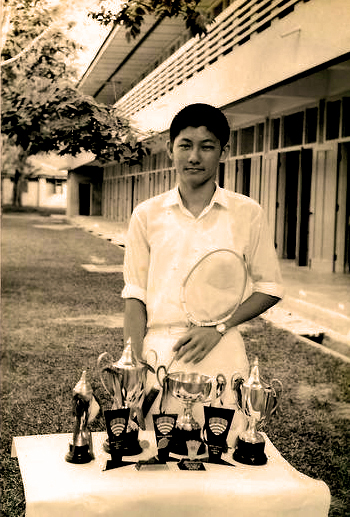
Aik Mong with his trophies as a student in Methodist Boys School, Penang.

Ever since Aik Mong left his second Badminton Association of Malaysia (BAM) coaching stint abruptly in 2013, he had always wanted to find ways to contribute towards coaching the young. The Penangite, who was once BAM coaching chairman in the mid-80s, thought he had some interesting ideas to be put across to Teong Hoe in JB.

These thoughts actually germinated last November when the four of us – Aik Mong, Swee Leong, Sylvia and myself – had gone to Penang on a food extravaganza! But the MCO curtailed our movements this year and now Aik Mong, whom we affectionately called “Mahaguru” (Master) because of his deep and profound thoughts, is no more with us.

I had actually “known” (note the inverted commas) Aik Mong since the late 60s. “Known” is actually a safer word for I hadn’t got close to him due to our age gap although we passed each other almost every other day as we cycled to school in opposite directions – me to Westlands Secondary School and him to Methodist Boys School in Penang. He’d always nod his head in my direction. I reckoned he may have seen me practising at the Penang Chinese Girls High School Hall, then one of the nurseries of Penang’s many badminton players.

While I was a small fry, Aik Mong was already in the Big League then as he was a Thomas Cupper and played in the SEAP and Asian Games. He had already wrestled for individual honours with then Indonesian maestros like Muljadi (Ang Tjin Siang) and Iie Sumirat. His best achievements was winning the 1971 Asian championship in Jakarta when he beat then Japanese star, Junji Honma. Three years earlier, he had also beaten Honma for the Asian schoolboys’ title in Tokyo.

In fact, Aik Mong played one of his best matches in the semi-finals of the Singapore Open in April 1969 when he beat Dhamardi (Wong Pek Shen) of Indonesia, who had just won that year’s All England men’s singles title about a month earlier, in a three-game thriller of 14-17, 15-14 and 18-14 lasting 69 minutes! Aik Mong, as a thinking player that he was, was observed to have changed tactics by placing many of his shots far to the baseline to thwart Dhamardi’s fast pace game.

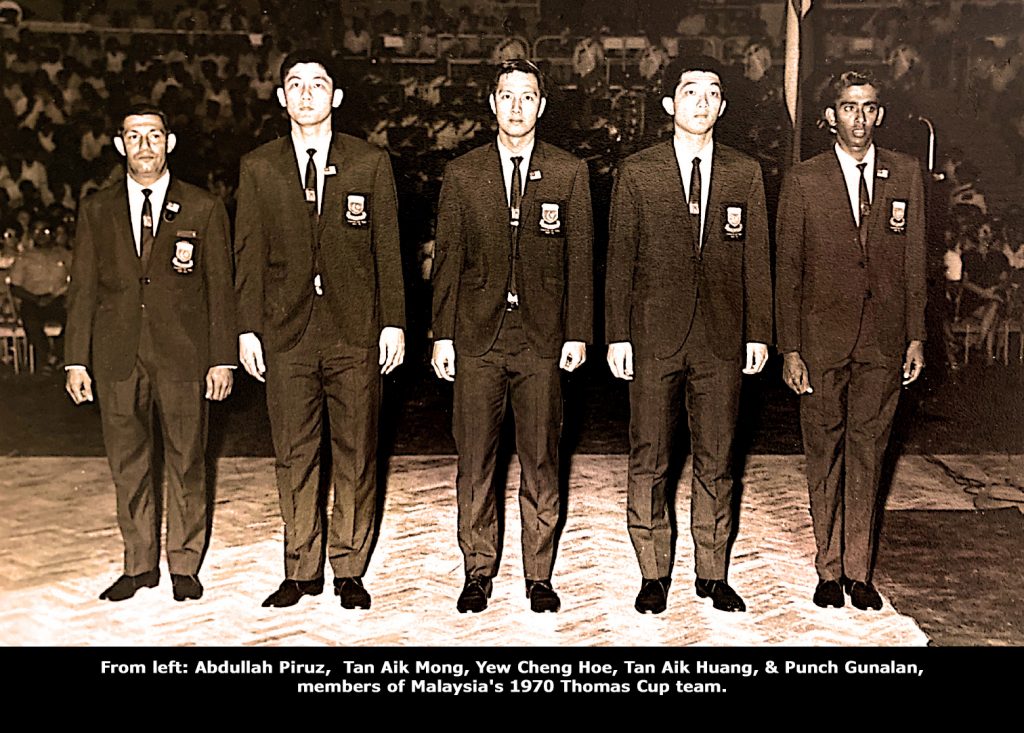
Incidentally Aik Mong also partnered his elder brother, Aik Huang (best known for his 1966 All-England men’s singles triumph in 1966) to gun for honours in the men’s doubles event. As a pair, they had even beaten the top doubles combination comprising the late Punch Gunalan and Ng Boon Bee in the 1972 Singapore Open! In the same year, they had advanced to the final of the Indonesian Open but only to lose to the crack Indonesian pair of Ade Chandra and Christian Hadinata in another three-game thriller.

When Aik Mong was 24 years old and working as a computer analyst for Malaysia Airlines in 1975, he announced his retirement from competitive badminton. In citing his reasons, he said that demands were too great for him and that badminton at the national level was not a part-time thing or a pastime because the game was becoming more scientific and demanded a lot in terms of stamina or fitness, court-craft and strategic thinking.

“You have to do so much training and play to stay at the top. No, I don’t want to play badminton all my life. It’s not my whole life.

“I enjoyed playing badminton because it was good for me and good for my country. But when the demands are so great as they are today and the going is tough, it is no longer a joy to continue playing.

“But somehow I had the satisfaction of being among the respected players in international tournaments. I couldn’t ask for more,” said Aik Mong then.

During the course of my career as a journalist in the 1980s, I had actually stumbled into Aik Mong’s office at Kumpulan Guthrie in Damansara Heights for a news story totally unrelated to badminton. It was for a business story and I was referred to him as he was then the group’s top computer analyst and had been successful in laying the foundation to clinching many top-level computer-based government contracts for his employers.

After a long absence, I got “re-connected” with Aik Mong sometime in 2012 at the annual CNY dinners thrown by Teong Hoe at Restoran Oversea in Jalan Imbi, KL. And Aik Mong was always careful with what he ate because of his medical condition.

Somehow, I got along well with him as I was able to respond to what he had to say, no matter how bizarre or twistingly philosophical the topic may be. In 2015, we got closer as I was involved in the publicity part of a birthday bash for Teh Kew San, skipper of the victorious 1967 Thomas Cup team in Penang. We continued to stay in touch via WhatsApp and we would meet occasionally whenever he had an idea to discuss as I’d happily go along as I had nothing to lose by listening to his interesting insights.

But it was in 2019 when we got really closer as Aik Mong had planned to visit another badminton great, Ng Boon Bee, in Ipoh. Boon Bee was off the radar when he retired from a coaching position at the Royal Ipoh Club. At the same time, we were also going to see Swee Leong as he had bought a gated dwelling in Ipoh and was extolling the virtues of food served in the Perak state capital. For a Penangite to sing praises of Ipoh food, we thought we had to find out.

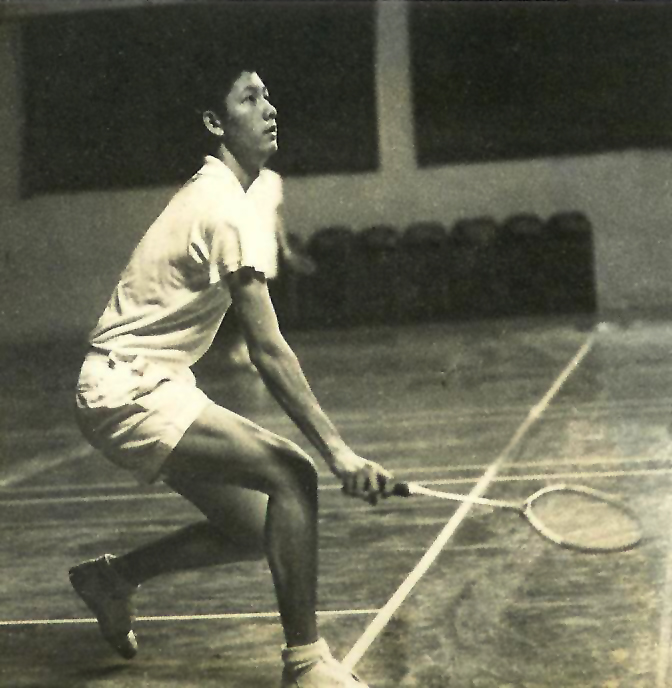
Aik Mong in action as a teenager.

While in Ipoh, Aik Mong tried connecting with Boon Bee from two telephone numbers that he had gotten from another badminton legend, Tan Yee Khan, in Pulau Pangkor, whom he had met about two months earlier. Aik Mong struck gold when the second number was answered by Boon Bee’s wife. And we got connected with Boon Bee at Tesco Ipoh.

An amusing incident happened at the shopping mall. As I momentarily left the group while the former national team-mates caught up with old-time reminisces, it seemed that Boon Bee had asked the trio — Aik Mong, Swee Leong and Sylvia — how on earth did they get associated with a burly guy like me whom he hadn’t known at all. (Like I said, being a small fry in a big pond, I did manage to speak to Boon Bee in Ipoh at the Perak Open in 1972 but how could he, as an already famous player then, remember me, either as a player, fan or human being?)

When told that I used to play competitive badminton with Swee Leong, Boon Bee said they must be joking as I was more suited for sumo wrestling!

They all didn’t tell me this until we were in the car on our way to KL. As Aik Mong related this conversation to me, he guffawed loudly in the trademark style of his father, Cheng Hoe, a noted football and badminton official in Penang in the 1950s and 1960s.

Aik Mong and I got along even better after that Ipoh trip. We would go for occasional lunches and at one instance, we even visited Lee Guan Chong, a noted badminton player and coach from Selangor, when he was hospitalised for a heart attack at PJ’s University Hospital in early November 2019.

Aik Mong, Swee Leong, Sylvia and myself had some of our best times together when we went to Penang later that month. We had travelled on the speedy Electric Train Service (ETS) operated by KTM (Malayan Railway) to Butterworth from KL Sentral and later hopped on a pre-booked taxi that took us to all the popular eating joints in Malaysia’s island food paradise. Aik Mong had joked that I needed to buy two ETS seats in view of my girth. So, two seats were bought in my name but somehow Swee Leong could squeeze in the seat next to me as he came on board from Ipoh to Butterworth. (So I wasn’t that huge after all!)

Upon reaching Penang in the late afternoon, we soon “attacked” a coffee shop in Pulau Tikus known for its sizzling “mamak mee goreng” (Indian Moslem fried egg noodles) and “mee rebus” (egg noodles cooked in spicy gravy) in Bangkok Lane. In the evening, we “cornered” another coffee shop known for “char koay teow” (flattened rice noodles in fish sauce fried with bean sprouts, garlic and prawns), “sotong kangkong” (steamed cuttlefish & water spinach mixed with sweet chilly sauce), “lor bak” (Chinese meat rolls) and other local goodies.

We were again in Pulau Tikus at sunrise for more good stuff – this time for “heh mee’ or prawn noodles (egg and rice noodles, bean sprouts and water spinach cooked in spicy prawn & meat broth) and “apong” (fermented rice pancake cooked with coconut milk) at a popular coffee shop opposite the long-standing police station. Later Aik Mong took us to his secret hideout of a coffee shop at Jalan Cantonment (also in Pulau Tikus) only known to locals for its Chinese-styled “nasi lemak” (rice cooked in coconut milk and served with fried fish & pawns with a dollop of pounded red chillies mixed with prawn paste) as well as “otak-otak” (steamed spicy fish custard wrapped in banana leaves). They certainly brought back memories of yesteryears. Over the next two days, it was the same story – food, food, food.

But of significance was a dinner on Nov 18 where the thoughtfulness and diplomacy of Aik Mong shone through. He had wanted to throw a dinner party that included Kew San, affectionately known as “Ah Peh” (Old Man), among Penang’s close-knit badminton fraternity. Teong Khoon had picked Nov 18. Little did we know that it was also the date of his wedding anniversary.

Aik Mong ordered a cake for the occasion but soon sensed something wasn’t right as it turned out that Teong Khoon’s daughter from his first marriage had also wanted to attend the party. This definitely put Aik Mong in a tight spot.

Amazingly he soon had a brainwave when he discovered that very day was also the birthday of Rosalind Singha Ang, another badminton great who coming all the way from Alor Setar, for the dinner. So, Rosalind got to blow the candles, then Aik Mong also announced that it was also Teong Khoon’s wedding anniversary and asked him to kiss his wife! A sticky situation was averted.

His wry sense of humour and a caring attitude will be sorely missed. Our “fireside chats” at the Jalan Macalister Airbnb late into the night about life in general and badminton specifically turned out to be some of the best times for our reflection. Aik Mong had also spoken of his rather short stint as a coach with BAM, how he had struggled to juggle between his studies and competitive badminton, and how he was living life then.

We did broach on the interesting subject on how the next Malaysian badminton great could be produced. Aik Mong’s views came in a roundabout way as he also spoke of Lee Chong Wei, Malaysia’s star player in the first two decades of the 21st century, and what he had done to achieve fame and glory. Aik Mong conceded that they came with a great price of sacrifice and sheer commitment that included long hours of toil at the gym and on-the-court training.

To put it simply, he was of the firm view that fitness is key to today’s fast-paced game. Without that, a player can’t go far because of the scoring system. We asked him how best one should attain that.

Aik Mong coolly said that if a player could skip 5,000 times a day as part of his or her training regime, then he or she would be on to something. The strokes and strategies can come later. Those words sounded like those of our Penang state schools badminton coach in the 1970s — Lawrence Barbosa!

His confidante Irene recalled that Aik Mong always took on a positive attitude all his life and emphasised that one should always look on the bright side and be happy. For instance, Aik Mong, being the doting grandfather that he was to his grandchildren in Singapore, they would always look forward to his visits because while he was there, there was no curtailment on wi-fi data or gadgets!

Aik Mong also used to say – “live life well and in the most humble way for only God is greater than us. We men are all equals.”

According to Irene, Aik Mong had confided in her that he was concerned for my well-being, especially my weight, as he felt that the demise of my wife, Amy, had affected me somewhat and hoped that I could move on. Such was the kind of concern of Aik Mong for the people he cared for.

I remember one amusing incident when I was sitting alone in a Penang cuisine restaurant in a Petaling Jaya shopping mall and was gorging myself silly over a bowl of spicy noodle soup: Aik Mong spotted me, came over to the open-style restaurant and bellowed from the aisle,”You shouldn’t be eating that!” And he laughingly cautioned me on my food intake.

I shall certainly miss Aik Mong’s sense of humour and his stimulating conversations, especially the cosy “fireside chats”. You were truly a Mahaguru, my friend. Rest well, my champ!

Ah Mong the Giant

By Sylvia Ng

I first got to know ”Ah Mong”, as he was always referred to that way, during our first MSSM (Majlis Sukan Sekolah-Sekolah Malaysia or Malaysian Schools Sports Council) training camp in the late 1960s at the Specialists’ Teachers Training Institute (STTI) in Cheras, Kuala Lumpur. Our first trip abroad together was to Tokyo for the Asian Schools Championships in 1968.

During our badminton playing years, we remained good friends. Although we got together during centralized training, we hardly had time for socials or fun time because we were so focused on our own training regime.

I had nicknamed him ”Giant” because he was a huge guy with a loud voice and laughter. He didn’t need a loud speaker.

Tan Aik Mong (left) with Rosalind Singa Ang & Sylvia (right).

In recent times after he had retired from his career in the corporate world, he would call me up whenever time permitted for lunch or a cup of coffee. And he always jokingly referred to me as his “girlfriend”.

During the annual Chinese New Year gatherings organised by fellow badminton player Albert Goh Teong Hoe in Kuala Lumpur, “Giant Mong” would ring me up to offer me a ride in a chauffeure-driven car to the restaurant and send me back to my apartment. He was such a kind soul as he said my safety was a priority. He would always say aloud, ”What are friends for?”

Tan Aik Mong, a few months before his death

“Ah Mong” certainly held a special view of the recent MCO (Movement Control Order) imposed after the Covid-19 pandemic. He asked me what was the lesson or takeaway in the more than eight weeks of partial lockdown. He was of the view that it was like being a mother, especially before the 1970s, when many women didn’t work outside but focused on the home for most of their lives after they got married.

Women then, he said in a WhatsApp message to me on May 13 this year, were cleaners, baby-sitters, cooks, social workers and companions in the house. But he had one proviso to his statement – “Although it does not apply to all wives but generally to all good mothers who dedicated their lives towards family needs and (upheld) the importance of (showing) loving kindness and responsibilities.”

“The lesson learnt (during the MCO) was what was it like to stay home most of the time. We (only) did it for eight weeks (or so) and almost all of us were crying out as if it was so terrible while mothers of the past looked upon it as an honour to be home and be responsible.”

That’s “Ah Mong” for you.

He will definitely be dearly missed by all of us who knew him. Let peace be with you, my dear friend.


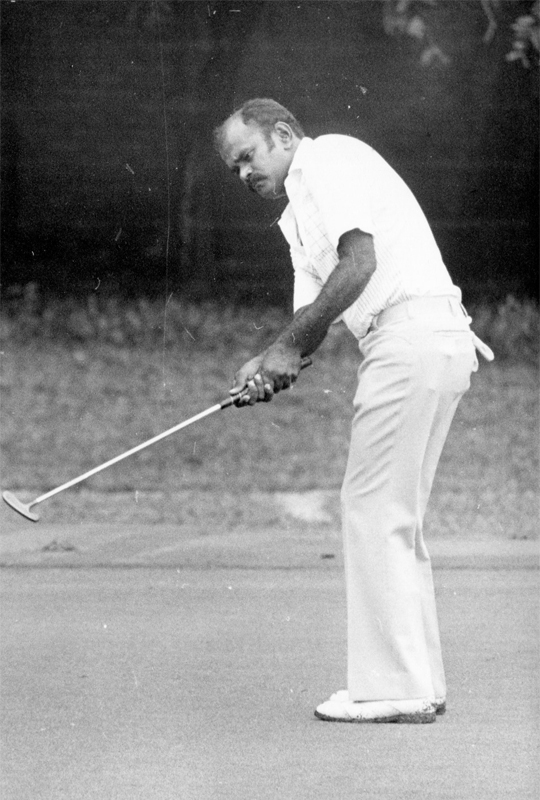
Bunker King Nellan

Bunker King Nellan
By George Das

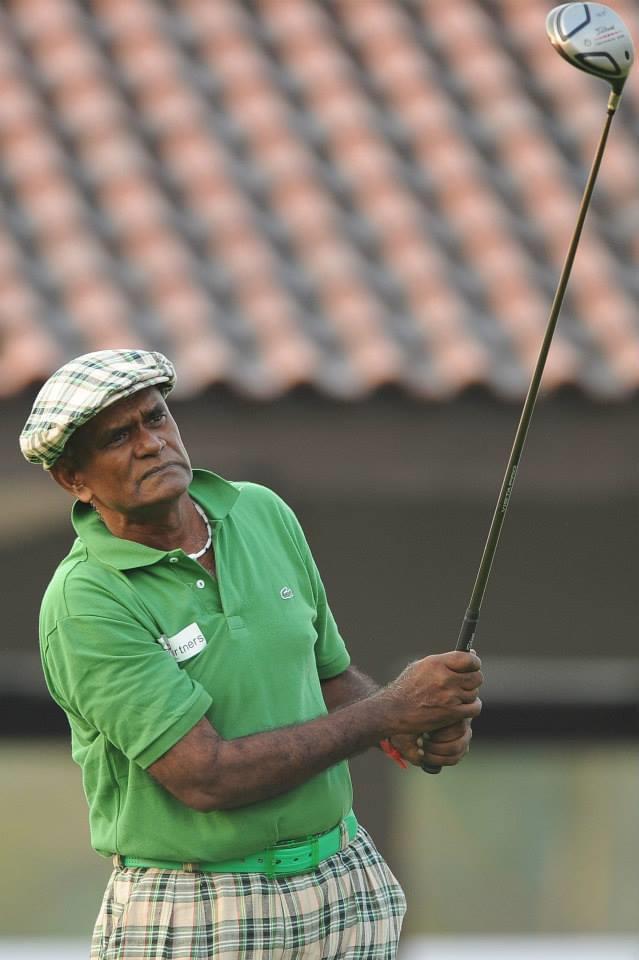
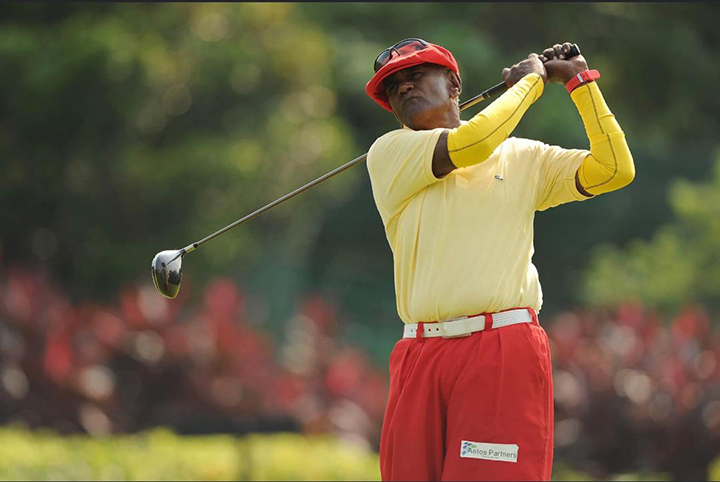
In the background, Jim Reeves was crooning “I Won’t Forget You”. It seemed so apt, this country ballad, befittingly played in the cremation ceremony of a legend who had passed away. It was May 18, 2020, and V Nellan was on his final course of his illustrious life.

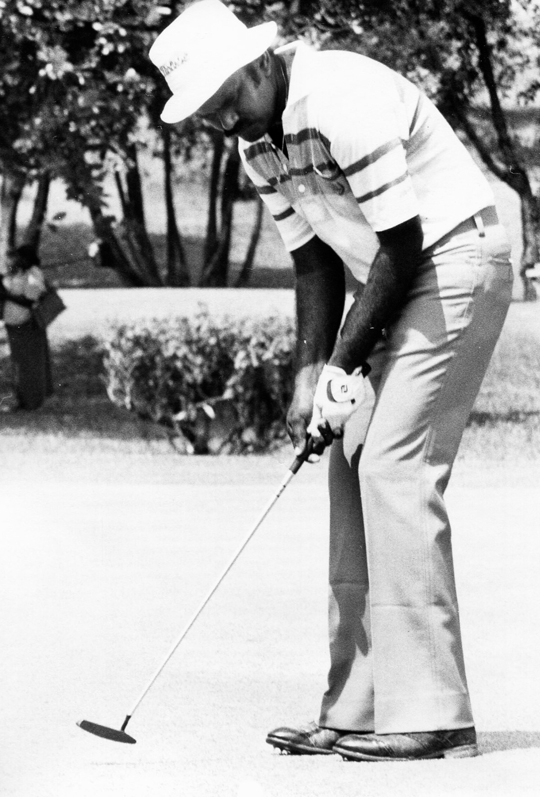
One of his favourite putters, a Slazenger, was cradled in 71-year-old Nellan’s hand as his casket was wheeled towards the mouth of the furnace.

That was the finishing touch for Malaysia’s most colourful golfer – holing out his final putt.

There was no clapping, no cheers — just tears and a very solemn atmosphere at the cremation ceremony for Nellan who died unexpectedly on May 16, 2020.

Because of the Covid-19 movement control order in the country, the thousands of friends and students he had coached in the past 40-odd years, could not come to bid him farewell.

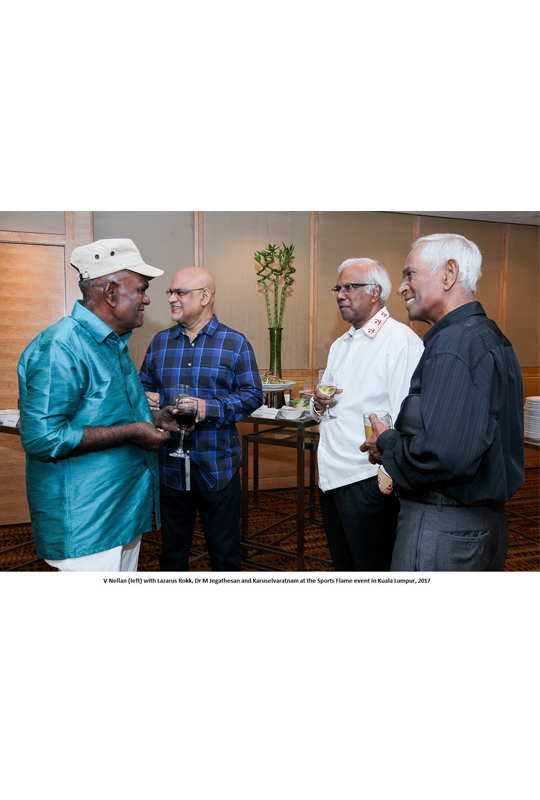
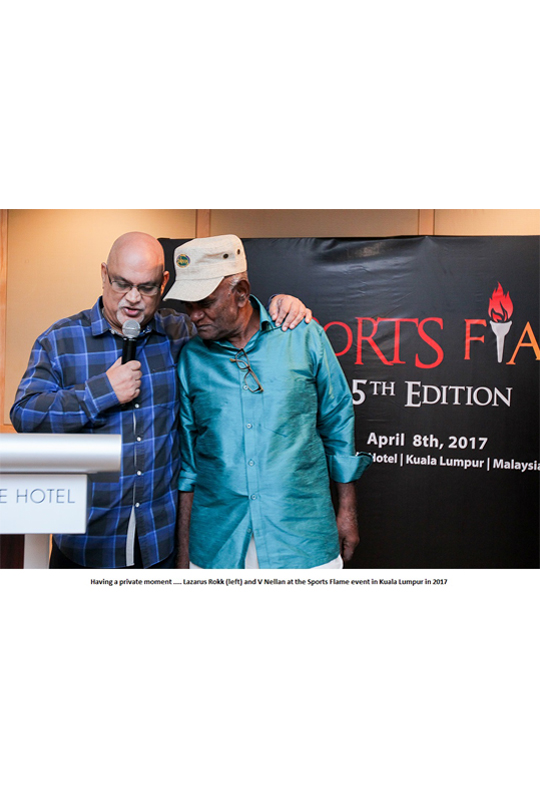
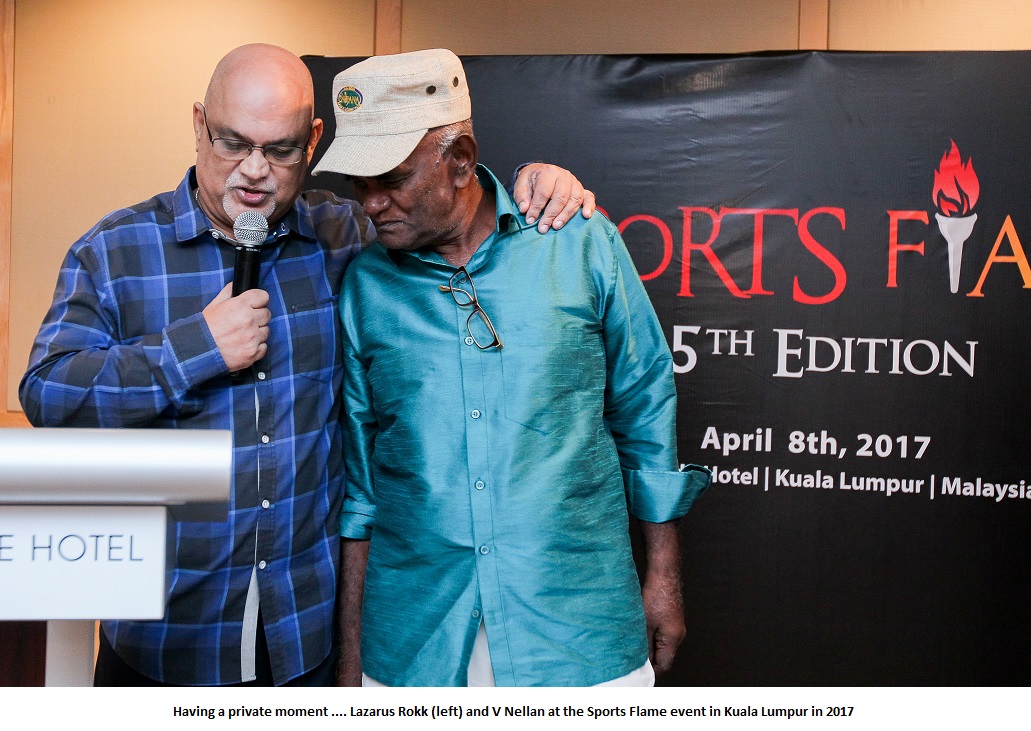
It was just his immediate family of about 14, the Hindu priest, my colleague Lazarus Rokk and I, representing the sportswriters who knew him, making up the numbers.

Like me, many others had only fond memories of this chappie.

Nellan lived and breathed golf. It was his spiritual base – every day, he just dreamt of nothing but golf, and he religiously worked on his game.
He lived his dream as a professional golfer. He never despaired. There is a saying in golf: You take the good with the bad.

And so, with grit and determination, Nellan survived the fears, the pressures, the failures, and the loneliness that came with professional sport. But he also enjoyed the successes, the pleasures of handing in a good score. Most importantly, he lived the adventure. He never lost sight of his dream and his passion.

Golf had a way of pumping him up.  He loved it so much that even until his death, he was still flying off to India, Japan, Indonesia, Singapore and around Malaysia, teaching or just keeping company with some businessmen over a round of golf.

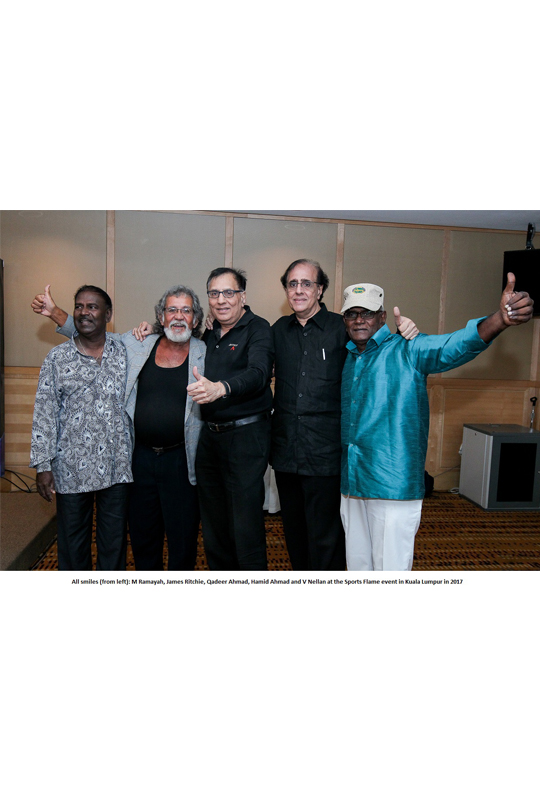
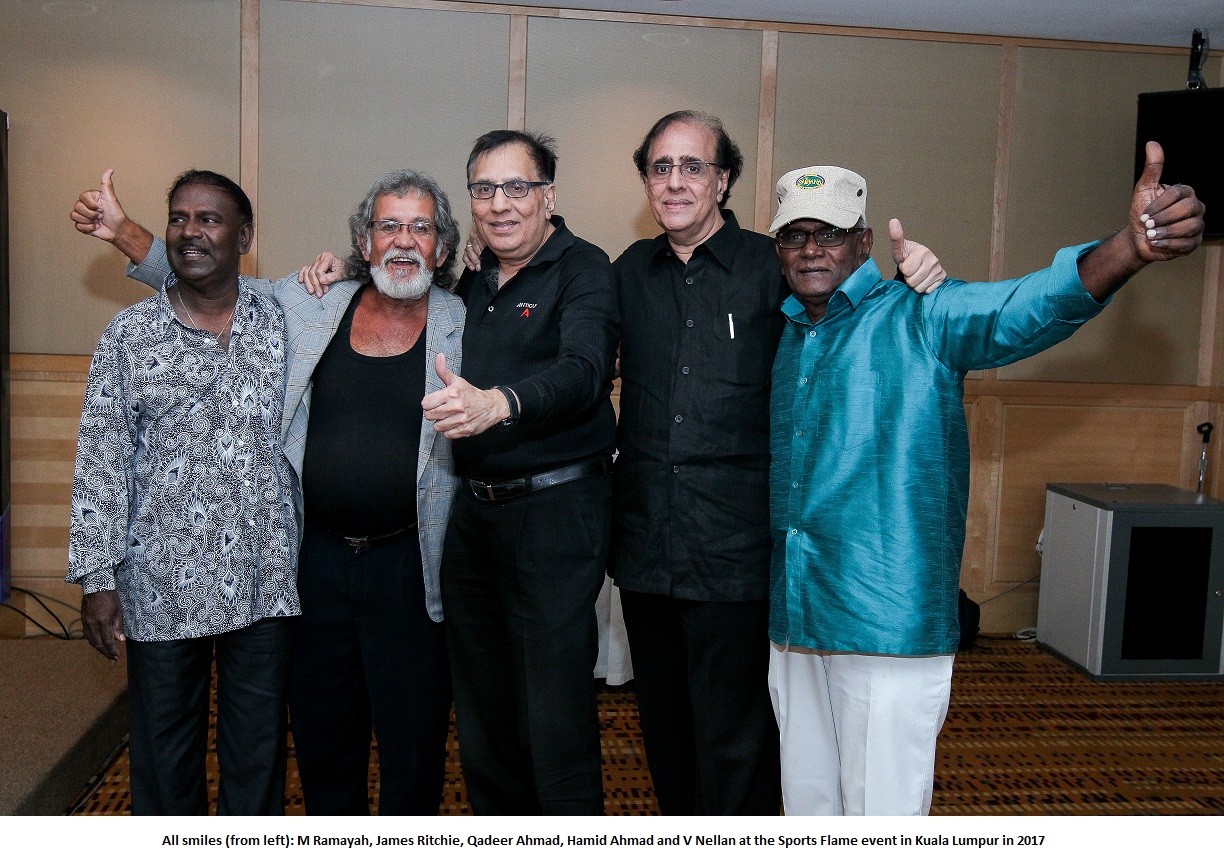
He was away most days, coming home for a week or so. That’s when he caught up with friends, driving off with brothers Qadeer and Hamid Ahmad every month to some small golf course an hour or 90 minutes away from Kuala Lumpur.

It was during those relaxing weeks that you could bet Nellan would call. Just to keep in contact. He never failed to do this on every home visit.

As Rokk and I walked away from the sombre scene, my mind was racing back to 1976 — 45 years ago when Qadeer, my schoolmate from St John’s Institution Kuala Lumpur introduced me to Nellan, Bobby Lim, M Ramayah, and Nazamuddin Yusof, all struggling Malaysian professional golfers.

Qadeer’s plea to me was: “Please help promote the local professionals. They are suffering to be competitive. Without sponsorship, they have difficulty getting to play on the Asian Tour.”

YouTube player

I was then a sports reporter with the New Straits Times [Malaysia]. And this was the beginning of my love for golf.

Until that casual dinner with them, I was a complete philistine who thought that golf was a lazy man’s game.

My understanding was that golfers just did a lot of walking while hitting a dimpled ball around.

How wrong I was to have such a misconception of the game, especially being a sports reporter. I discovered there were woods, irons, and putters. Each club gave the golfer a different option to execute shots.

I would hang around them almost every night either at the Equatorial or Holiday Inn on the Park, two hotels in Kuala Lumpur. Sometimes there were other professional golfers from the Philippines (Frankie Minoza, Mario Siodina), Thailand (Sukree Onsham), who would join us.

I would listen to their golf tales intently especially after that particular day’s round in a tournament.  Each had some exciting experience and some woeful moments in their game.

In between, Nellan, as usual, would interject with a few jokes which not only tickled us but boosted the spirits of those who had a poor game earlier.

It was here that I was schooled in the game without having to play it. They unfolded the intricacies of what was perplexing to me through their explanations. It gave me a better understanding of how they prepared for tournaments, the exercises, their diet, their commitment and their love of the game.

Nellan would always stress to me the importance of a fitness regime.

“It’s just not going to the driving range and whacking a few hundred balls or doing stretches. You need to build your fitness too.”  Nellan did it by running and doing light gym workouts and maintained a strict diet.

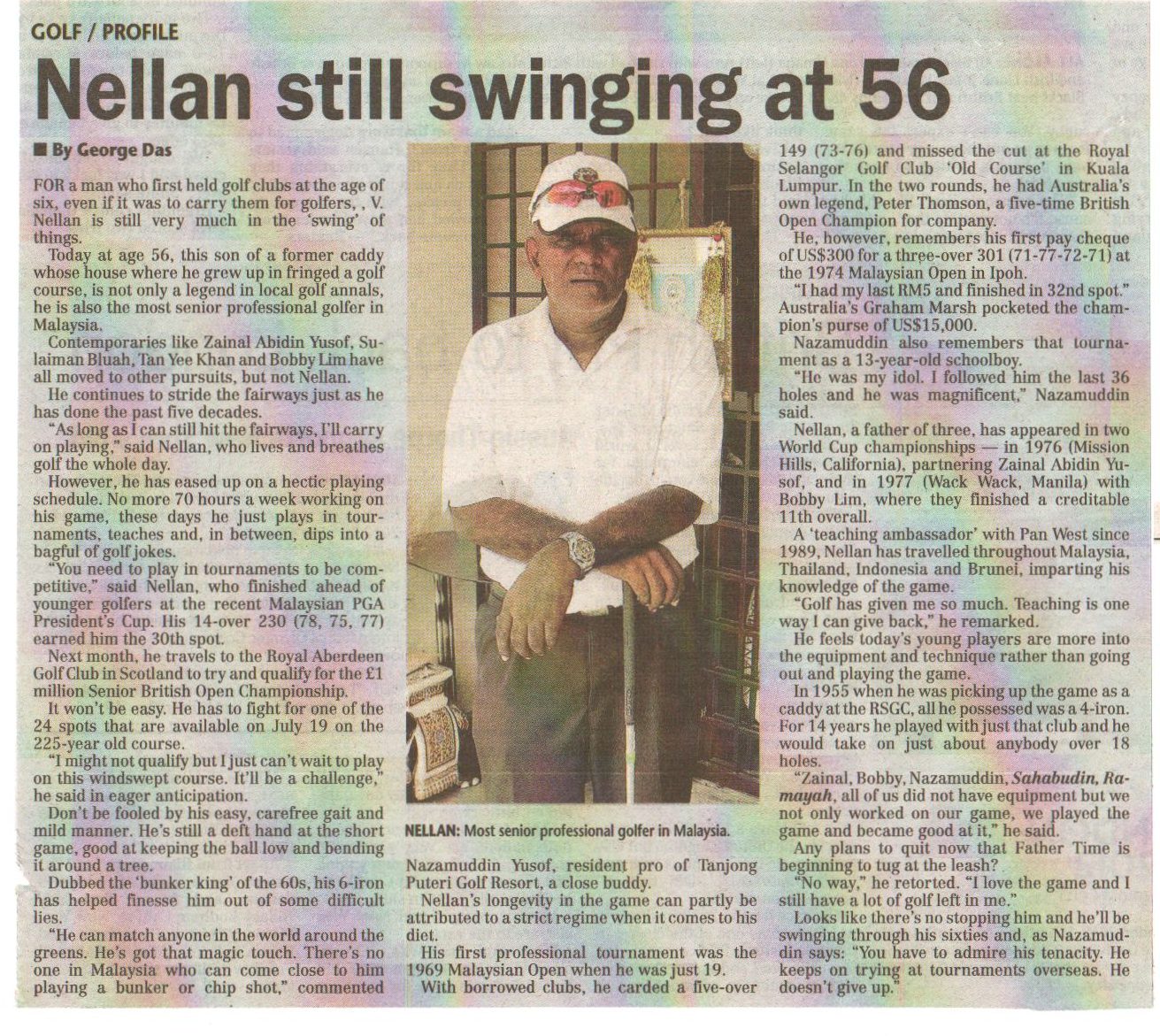
He told me that he studied the older foreign professionals who used to grace the Malayan Open [later Malaysian Open] since 1962 at the Royal Selangor Golf Club course. This was where he honed his game as a 12-year-old caddie.

They would all follow Peter Thomson, the five-time British Open champion. Thomson was already a golf legend and like all of them, Nellan watched every action of Thomson’s game, how he hit the ball, his swing and his putting motions.

Here, he learned to focus on one thing at a time.  “Today’s youngsters are more into equipment and technique instead of going out there and playing the game.”

“We, Bobby Lim, Zainal Abidin, Nazamudin Yusof, Sahabuddin Yusof and M.Ramayah,  didn’t have the equipment but we really worked on our game and “developed it”, he recalled in 2004.

He started to caddy the leading RSGC amateur players in the ‘60s — Benny Low, K C Chew, Edmund Yong, and the Lee brothers Tommy and Alex. He and the others modelled themselves after them –their golf etiquette, their behaviour on the course, their sense of dressing.

As an eight-year-old, Nellan together with M Ramayah, K Selaruas and other youngsters would follow their mothers after school to pick balls for 10 cents a day at the RSGC tennis courts and then run off to watch the leading club golfers play. He also remembered being a ballboy at the 1954 and 1955 Malayan Tennis championships.

All of them lived in the housing quarters provided by the club as their parents worked for the Royal Selangor Golf Club.

Nellan’s father was employed as a fairway turf-cutter who doubled-up as a caddie after work. And it was natural for all the club employees’ sons to pick up the game for their homes overlooked the greens or fairways.

At night, Nellan and his friends would go to the driving range where the club members had earlier hit hundreds of balls. With their homemade clubs made out of guava tree branches, they would hit the balls. Their workout would be to hit the balls as close to one spot as possible to make it easier the next morning to collect the balls.

This is where they learned to drive the ball with accuracy.

I recall Nellan telling me decades ago: “Nothing serves your game better than putting in a lot of practice. All the top players in the world follow this system.”

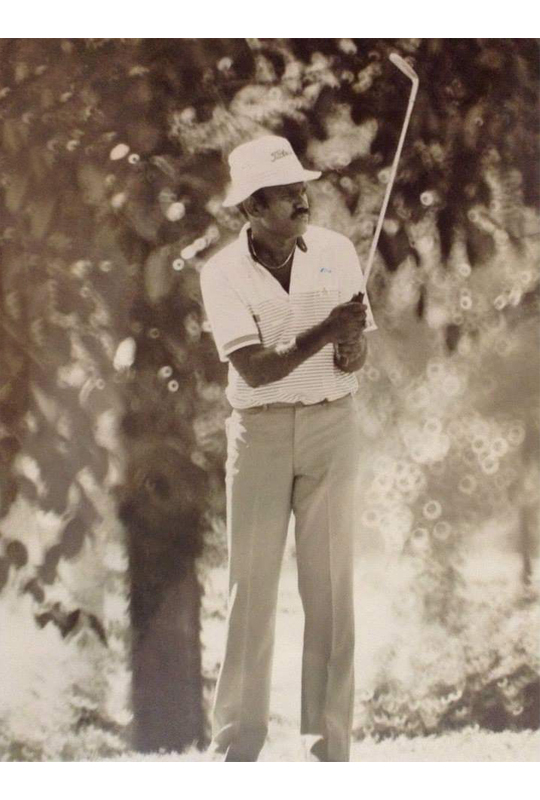
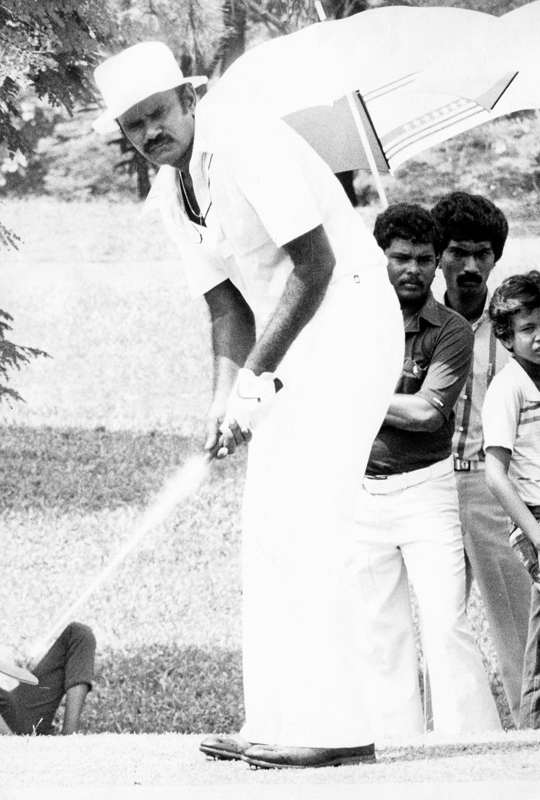
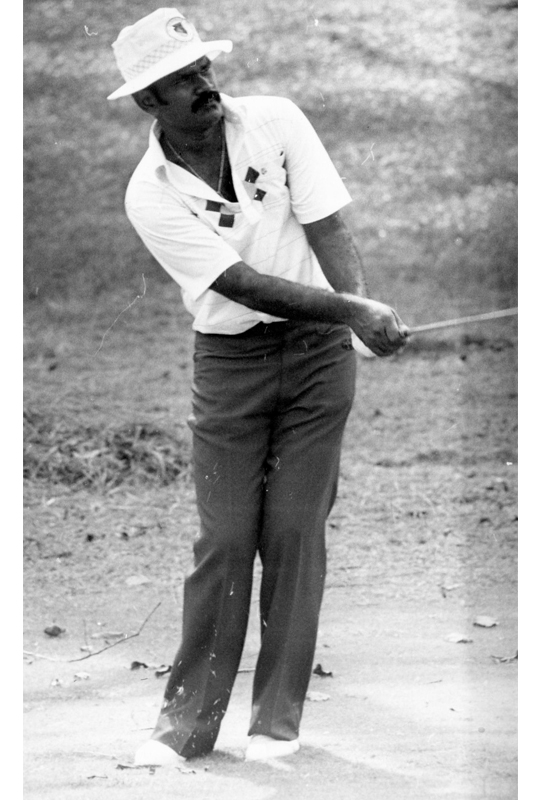
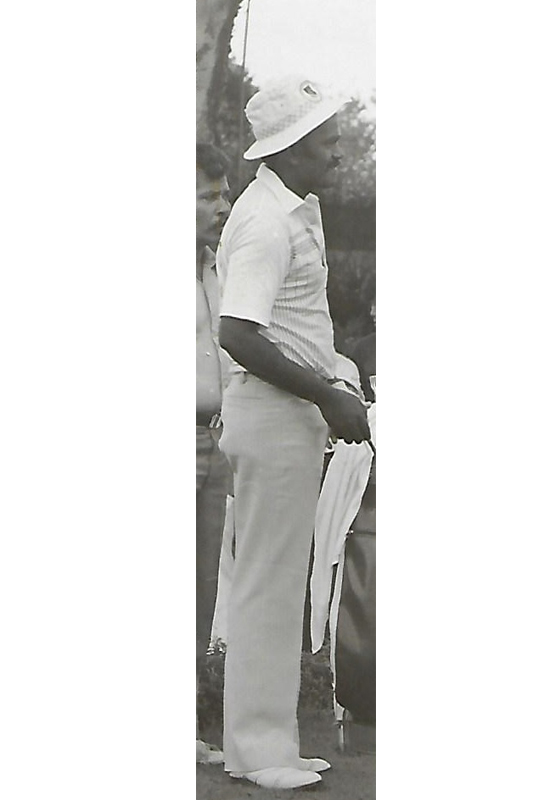
Nellan was a superb bunker player. He could play an intentional shot from any bunker onto the fairway or green with ease and was regarded as the” bunker king “in the country. His favourite club for getting out of bunkers was the Arnold Palmer Dunlop sand wedge while for practice he used the 4-iron.

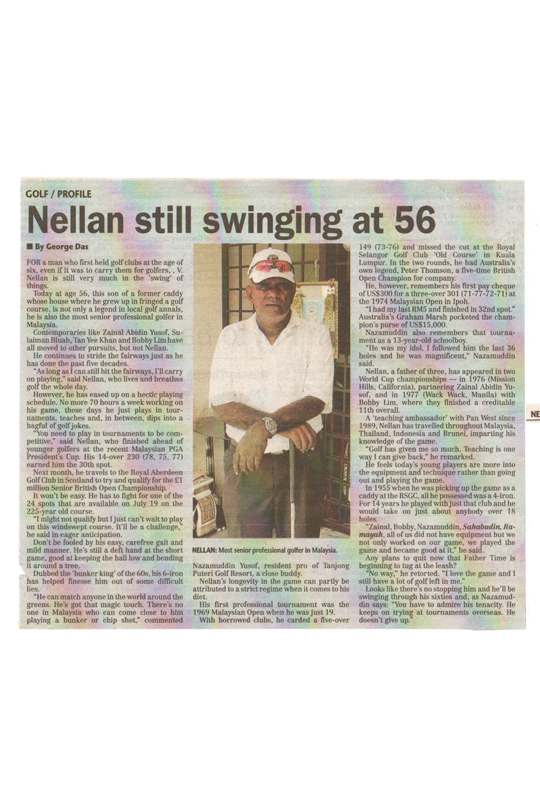
As Nazamuddin Yusof, a fellow Malaysian pro, who watched Nellan play in the 1974 Malaysia Open at the Royal Perak Golf Club course as an 18-year-old schoolboy said: “He was brilliant. No, he was a master craftsman when it came to hitting out of the bunkers. He was no doubt the best there ever was in Malaysia when it came to bunker play.” Nellan finished 32nd to pocket US$300.

Nazamuddin said that when he turned pro in 1976, Nellan passed him many tips on how to get out of bunkers. “I still use Nellan’s tips in teaching golf today.”

YouTube player

Here’s how Nellan developed his mastery of bunker play.

His childhood home was just a couple of putts away from RSGC’s 17th hole of the Old Course – a par-3 elevated green surrounded by five bunkers where Nellan worked for hours under the moonlight to perfect his shots.

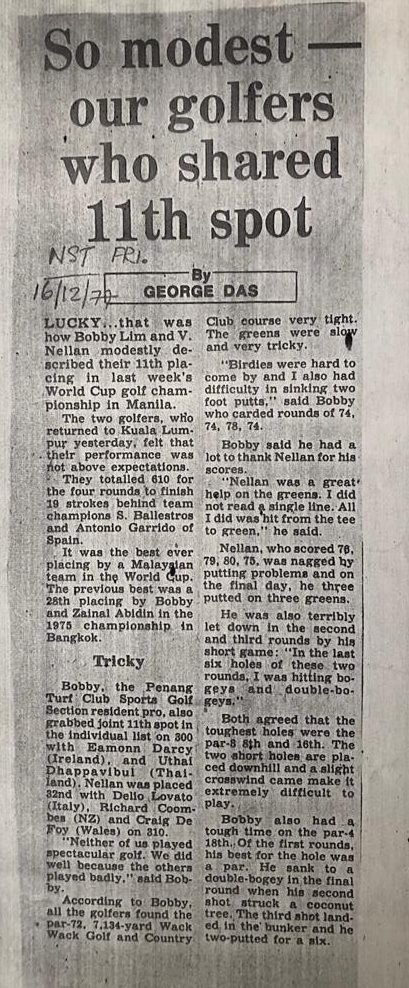
“He could play some superb trick shots and crack a joke to the excitement of the crowd,” recollects Bobby Lim, who partnered Nellan in the 1977 World Cup tournament at the Wack Wack Golf Club course in Manila. They finished 11th overall for Malaysia’s best finish ever.

Although Lim lived in the adjoining Chinese quarters at RSGC , he only became  close to Nellan when they were about 14 years of age and that close bond continued until  Nellan’s death. In 1968, Lim loaned his full golf set with which Nellan captured the RSGC caddie championship title.

Nellan was an easy-going character and would pass on his golf knowledge to anyone and everyone. He was known to walk up to strangers practicing and correct their swing or even bunker shots.

“When we toured Indonesia in 1977 for a month, Nellan corrected my drives, my swing, and my putting. That was how generous Nellan was,” said Ramayah, who came from the same “kampung”.

YouTube player

Like Ramayah and Nazamuddin, there were many others he would help — this included a 19 year-old rookie pro Vijay Singh of Fiji.

Vijay made Malaysia his launchpad, playing on the local circuit. He was still trying to get his game right, and Nellan was there to help him.

He was like a mentor to Vijay, and whenever the Fijian came this way after he made his name on the world stage, Vijay never forgot his humble beginnings. He always took time to meet Nellan to reminisce.

There was one nagging disappointment that he carried all through the years. After winning the Caddie championship crown, he requested to play in the 1969 Malaysia Open at RSGC but they  did not entertain his request. However, the Singapore Open (1969) organisers  accepted his application together with Lim and Ramasamy. This was Nellan’s first international professional golf competition.

He was very appreciative of Saujana Golf and Country Club for they continued support for  him by  sponsoring him as their touring pro throughout the years  playing in the Senior British Open, and other senior events in the US, Europe and Australia.

“I still have got a lot of golf left in me. No way am I going to put my clubs away. I love the game too much,” was how he regarded golf and even the early stage colon cancer which he contracted in 2007 could not keep him away for long from his passion.Three months after surgery he was doing light training and within a year he started competing again.

Nellan could have worked at many lucrative golf assignments overseas, but he never took up those opportunities. From 1992 to 1995, the Callaway Golf Company wanted him to be a coach at their headquarters in California. There was another offer to coach youngsters in Mexico.

He turned down all these offers. He didn’t want to be stuck in one place. He enjoyed being a nomadic golf pro, travelling, meeting different people and above all, enjoy playing the love of his life.

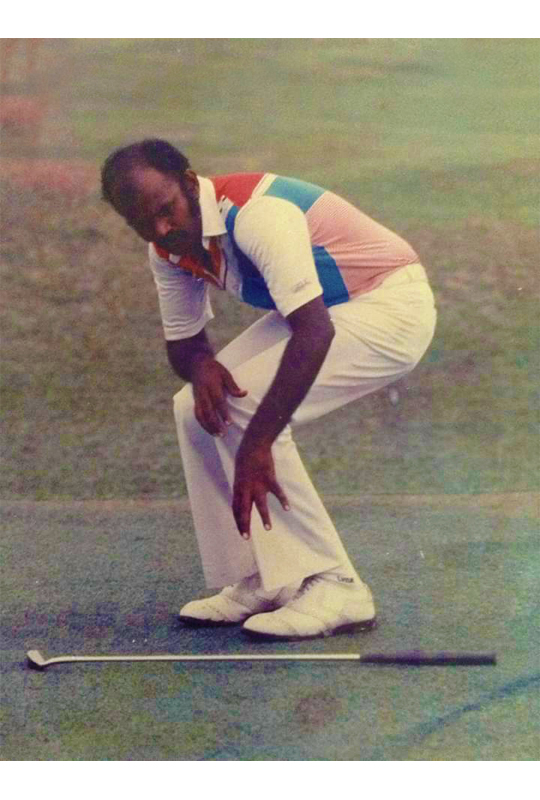
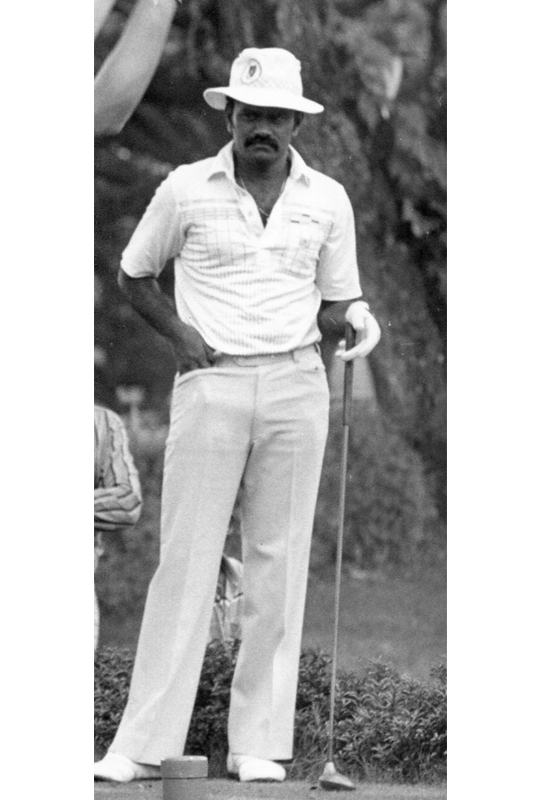
For sure, the golfer with those trick shots and a pocketful of jokes, often mimicking Fred Couples, Seve Ballesteros, Lee Trevino and others, had helped establish a new frontier for Malaysian golf.

YouTube player

Skiing or Golf
By Kyi Hla Han

I first met V. Nellan at a tournament in Sweden in the early 80s.

I went to play in Europe in 1983. The European Tour was not what it is today. There was no Challenge Tour in those days, but there were well-organised tournaments in countries such as Sweden, France, Italy, Germany and others.

In one of the Swedish events in Malmo, the tournament organisers said I would be housed with a Swedish family, along with two players from Malaysia.

I found out it was Nellan and M. Ramayah. I was quite happy to see them as I was the only player from Asia plying my trade in Europe in those days and had been in Europe for a few months.

We played the practice round together. The weather was pleasant, but on the first day of the tournament, a storm swept in. It was 8 degrees Centigrade, rainy, and windy.

Nellan and I were teeing off around the same time, and he whispered to me: “Kyi Hla, I don’t think I want to play in this weather so I want to withdraw.”

He didn’t have any cold weather or rain gear, so I lent him mine. He looked like he was going skiing.

I laughed when he said, ‘This is the first and last time I’m going to play in Europe’.

It was quite funny the way he was talking to me about the conditions saying, ‘Why did he ever come and play here’. Anyway, he did play and did not score very well.

(Kyi Hla Han is a golf pro from Mynamar. Was the former Executive Chairman of the Asian Tour & the 1999 Asian Order of Merit No. 1).

Indian Football’s Three Aces

By Shyam Ghosh
(Shyam Ghosh, cricketer turned sports journalist was Sports Editor of The Statesman, Kolkata. Has covered 7 FIFA World Cup, 4 Olympic Games & 3 Asian Games).

In the space of 40 days, I lost two close friends.

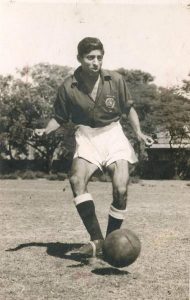
The first to go was P K Banerjee, the greatest winger in Indian football who went on to forge a successful coaching career.

The second was Subimal Goswami, better known as Chuni, under whose captaincy India won the 1962 Asian Games gold medal.

Both – Banerjee captained the team for the 1960 Rome Olympics — played for years together in the Indian team. Of the two, Goswami was closer to me as we played cricket together in the 60s. Goswami played for the Mohun Bagan club and me for the East Bengal Club. But for one of those years, we played together for Mohun Bagan.

Goswami created a sensation when he helped a combined East and Central Zone team beat a mighty West Indies side led by Garfield Sobers by taking eight wickets in that match.

Cricket followers of Bengal, particularly Mohun Bagan supporters, wanted Goswami to be in the Indian Test side. After Goswami died, many journalists asked me ‘whether an injustice had been done on him’. My reply was no. He was a born sportsman, but he took cricket seriously only after retiring from international football.

I admired Goswami’s fighting spirit.

His debut for the Bengal cricket team in the Ranji Trophy was against Hyderabad who had West Indies pace bowler Roy Gilchrist in their side.

In 1962, the Board of Control for Cricket in India hired four West Indies pace bowlers to train Indian fast bowlers. Lester King coached the East Zone boys, and I trained under him.

During a Mohun Bagan-East Bengal match, Manindra Dutta Roy, the then chairman of the Bengal cricket team, said a spot would be found for Goswami, who had been scoring a lot of runs in friendlies in Hyderabad, for the Ranji Trophy quarter-final match against Hyderabad at Eden Gardens.

Goswami contributed a valuable 37 runs on debut and went on to play for Bengal for the next 10 years. In 1971-72 he captained Bengal in the Ranji Trophy final.

But we were close when I joined The Statesman as its football correspondent in 1971. He was a guest columnist for the largest circulated Bengali daily Ananda Bazarpartrika. Banerjee contributed a weekly column in the Telegraph, an English daily of the Ananda Bazar Group.

As a result, the All India Football Federation would from time to time involve us for the betterment of the sport in the country. The best contribution that we made together was when India started the National League in 1996.

The then secretary of the Asian Football Confederation, Peter Velappan, who has since died, pushed to get India to start a national league. He was surprised we did not have one at all.

The AIFF appointed a five-member committee to start the National League. The members were T.O. Abdullah and Sugunan from the AIFF and Goswami, Banerjee and myself.

We travelled together around India before formalising the structure of the National League.

In those days, I saw how determined Goswami was about forming the National League. At times, we three had different views — but in the end, we formulated the scheme for the betterment of football in the country.

The Indian Football Federation decided to send the national team to England in 2000 for international exposure. Baichung Bhutiya was the captain of the team, Sukhvinder Singh was appointed coach and Banerjee, Goswami and myself accompanied the side.

India played three matches. Every night before dinner, we three, along with Sukhvinder, discussed how to improve Indian football.

After Goswami died, I remembered two incidents.

In 1975, we were travelling together in a cab from Cochin to Kozhikode.

During our conversation, the driver suddenly asked Goswami: “You are Chuni Goswami?”

As we laughed, the driver said that he could still visualise Goswami’s artistry during the Santosh Trophy at Ernakulam in 1955.

That was Goswami’s first participation in the national football championship and Bengal won the title defeating Mysore 1-0. Goswami received a lot of prizes for his outstanding performances.

The driver was initially reluctant to take the fare. He took an autograph for his grandson.

The other incident was at the Mexico World Cup. As we were talking outside the ground after the match between Brazil and France, a group of boys suddenly surrounded Goswami and asked him why Brazil lost the game.

Goswami nicely analysed the game, and after the boys left, he asked me: “My assessment is ok?”

I smiled and said: “You are always perfect.”

I Am Golf!

I AM GOLF
By George Das

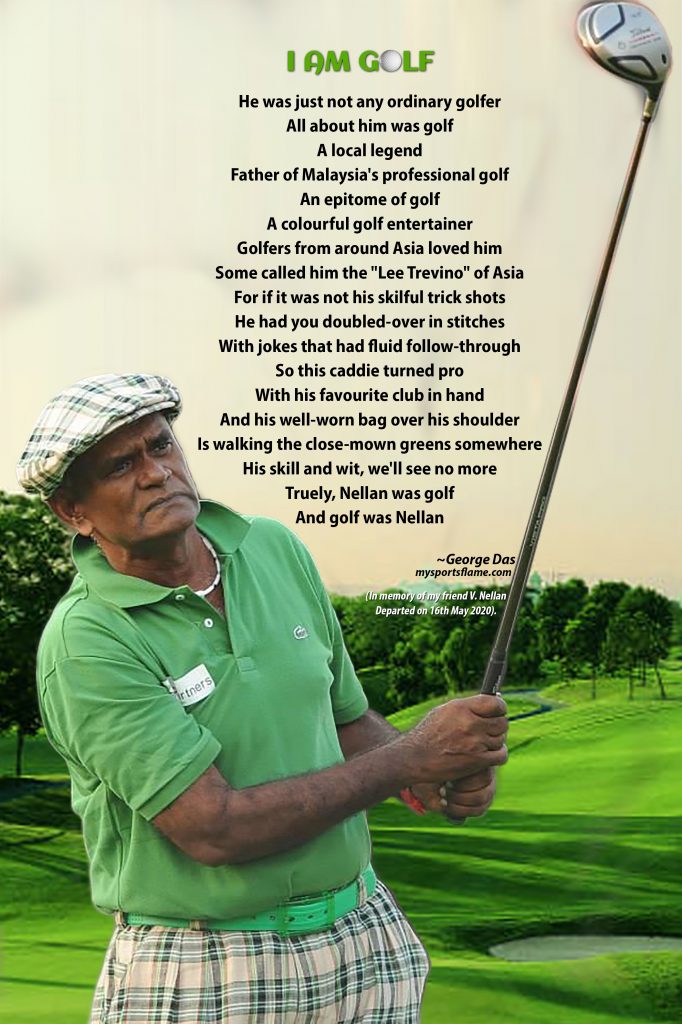
He was just not any ordinary golfer
All about him was golf
A local legend
Father of Malaysia’s professional golf
An epitome of golf
A colourful golf entertainer
Golfers from around Asia loved him
Some called him the “Lee Trevino” of Asia
For if it was not his skilful trick shots
He had you doubled-over in stitches
With jokes that had fluid follow-through
So this caddie turned pro
With his favourite club in hand
And his well-worn bag over his shoulder
Is walking the close-mown greens somewhere
His skill and wit, we’ll see no more
Truely, Nellan was golf
And golf was Nellan

(In memory of my friend V. Nellan
Departed on 16th May 2020).

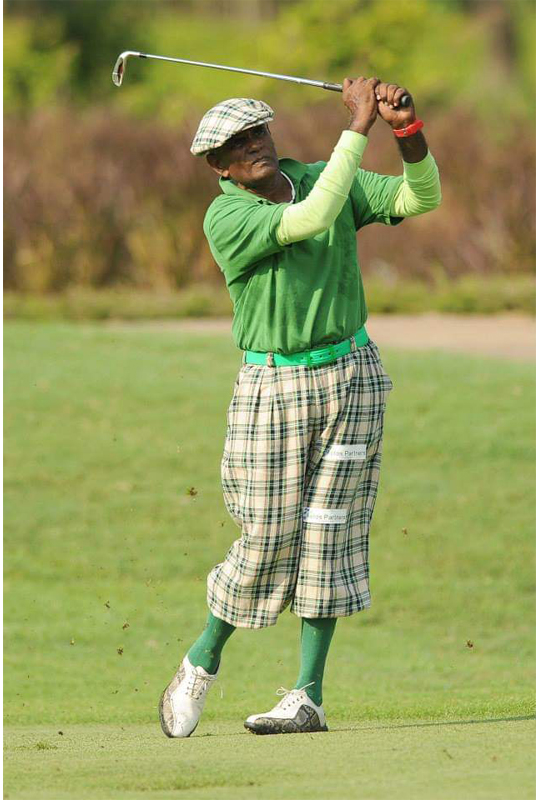
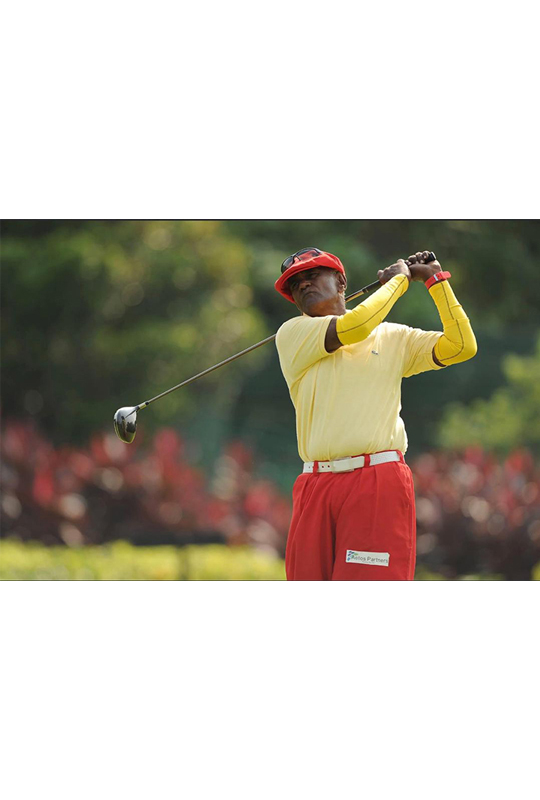
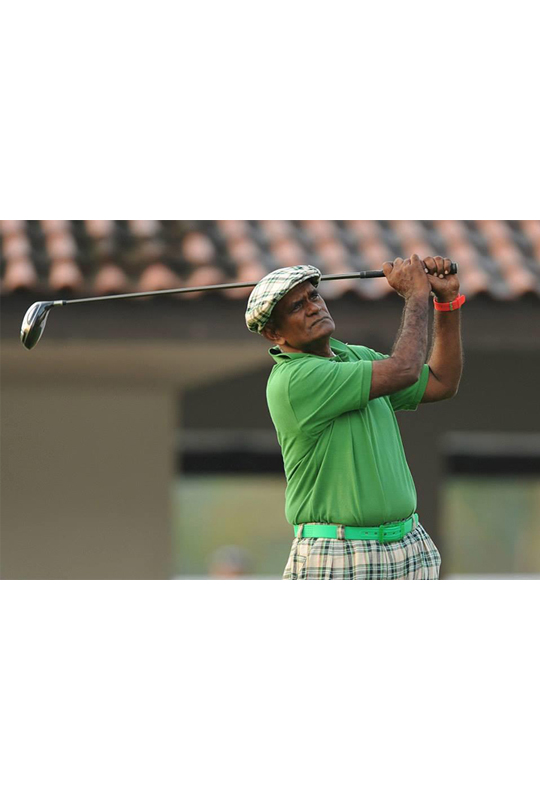
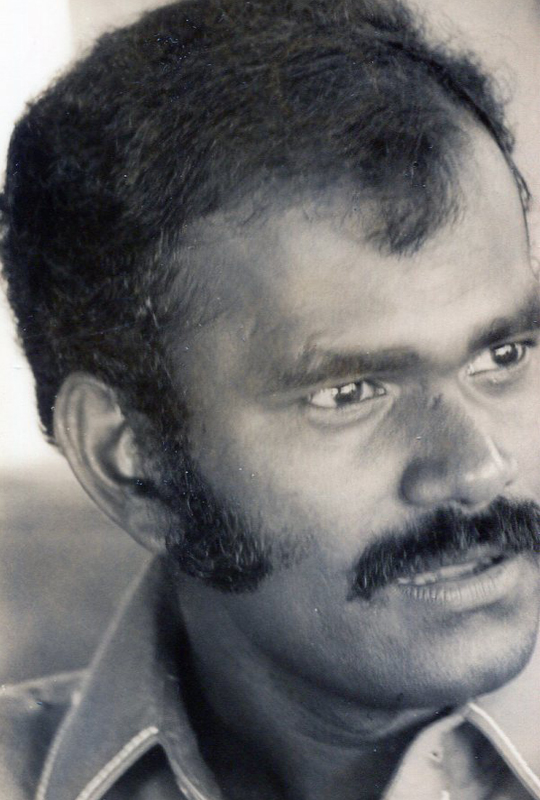
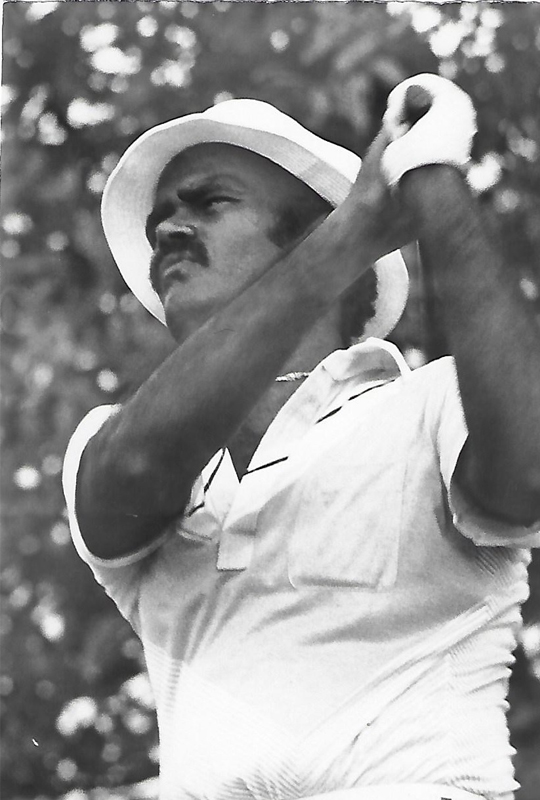
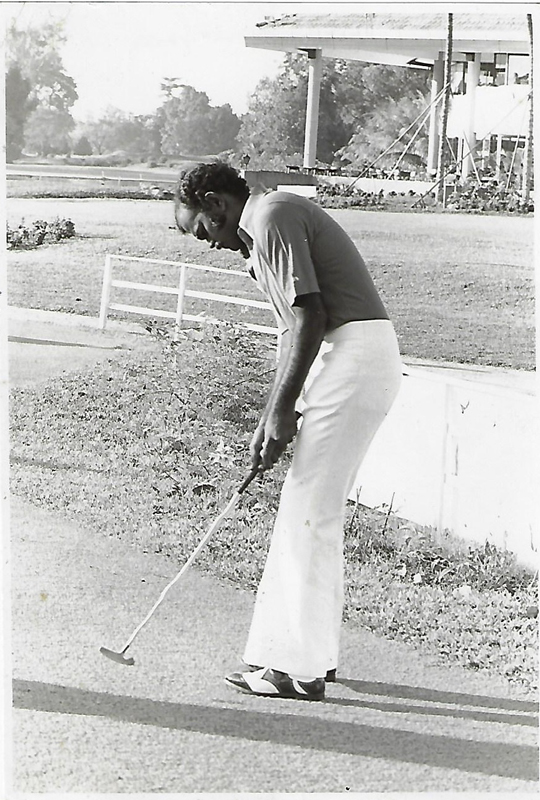
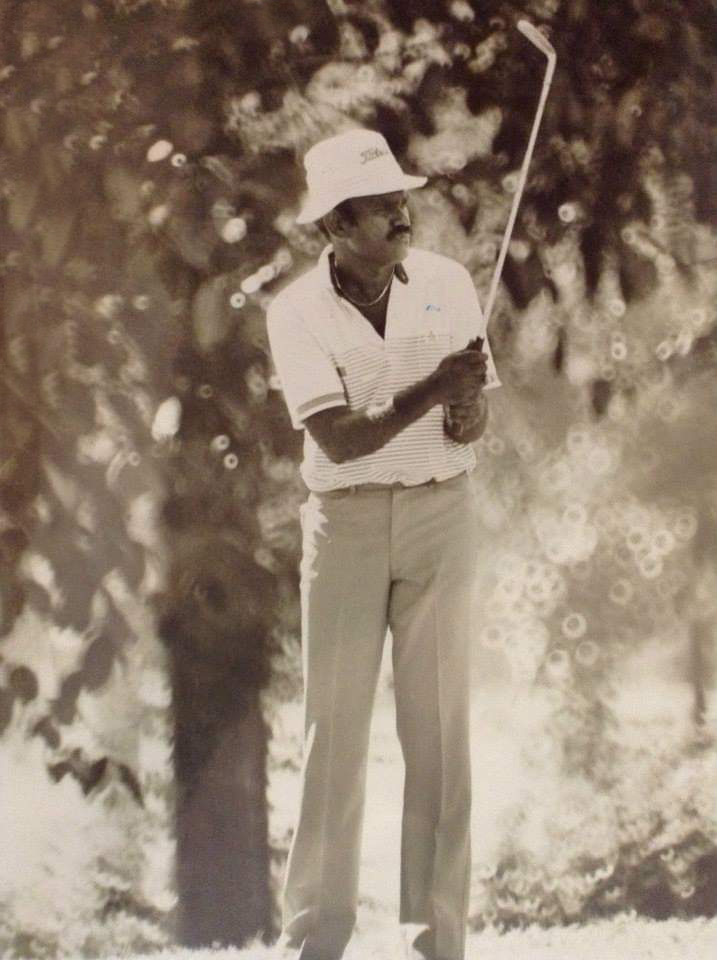
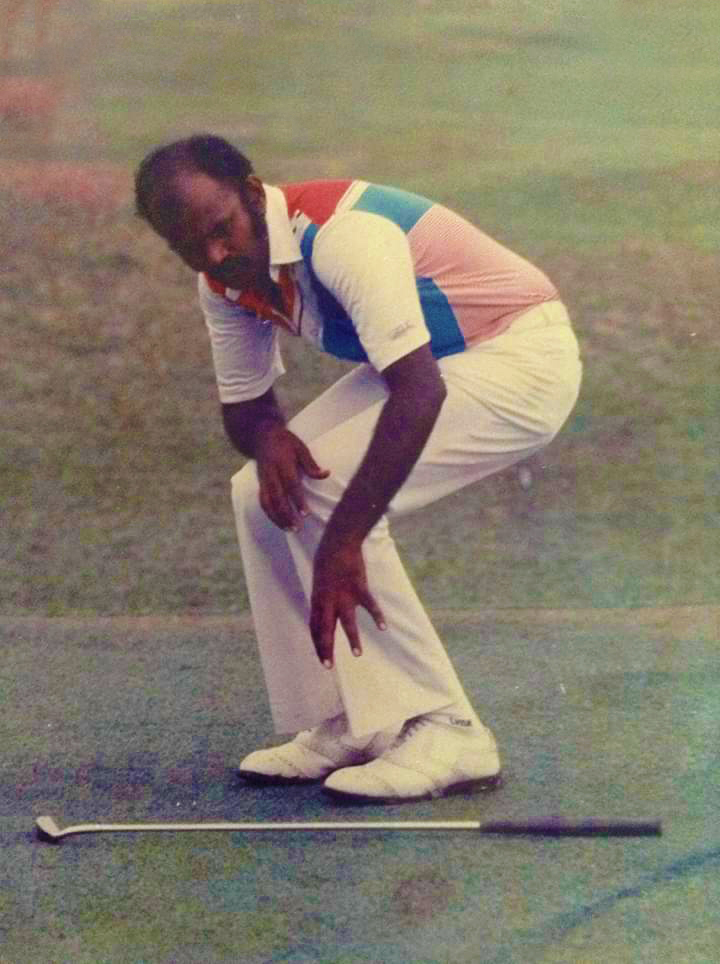
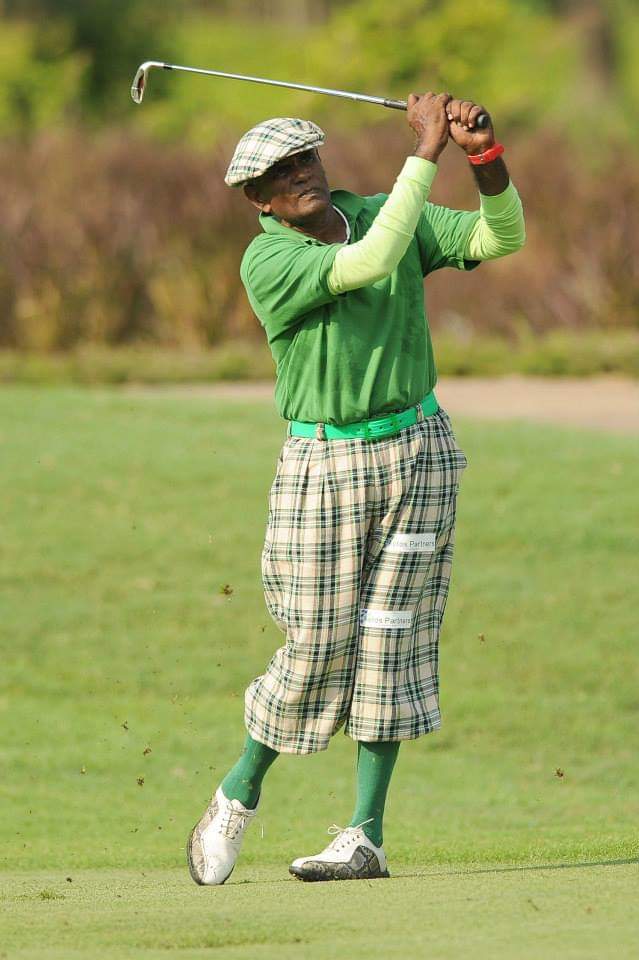
  • V.Nellan, Malaysian Golfer.

  • V.Nellan, Malaysian Golfer.

  • V.Nellan, Malaysian Golfer.

  • V.Nellan, Malaysian Golfer.

  • V.Nellan, Malaysian Golfer.

MOST COMMENTED

Bunker King Nellan

Shattered Dream

- Advertisement -